Why do schools use educational toys in classrooms? The answer reaches beyond bright colors and quiet entertainment. Well-designed toys give children a physical way to test ideas, revise mistakes, and explain their thinking. A child may build a bridge, watch it collapse, and try a wider base. That small failure matters.
UNICEF and the LEGO Foundation’s 2018 Learning through Play report connects playful learning with communication, problem-solving, creativity, and social development. The OECD’s Starting Strong research also emphasizes active, child-centered experiences in early education. These findings support classroom tools such as counting blocks, pattern tiles, science models, and role-play materials. They turn abstract instructions into visible actions. Teachers can observe who collaborates, who persists, and who needs another explanation.
The evidence is promising. It is not magic.
A toy cannot replace skilled teaching, purposeful questions, or inclusive planning. The National Association for the Education of Young Children stresses that learning materials should match children’s development, culture, interests, and learning goals. That standard creates an important test: does the toy deepen thinking, or simply fill time? A tablet-based game may offer instant feedback, while wooden pieces encourage slower conversation and hand movement. Both can help, but neither works equally for every learner.
This article examines why do schools use educational toys in classrooms, how teachers select them, and what reliable research actually supports. It also considers practical limits, including cost, classroom space, safety, and assessment. A balanced view is necessary. Educational toys can open a door to learning, but teachers still decide where that door leads.
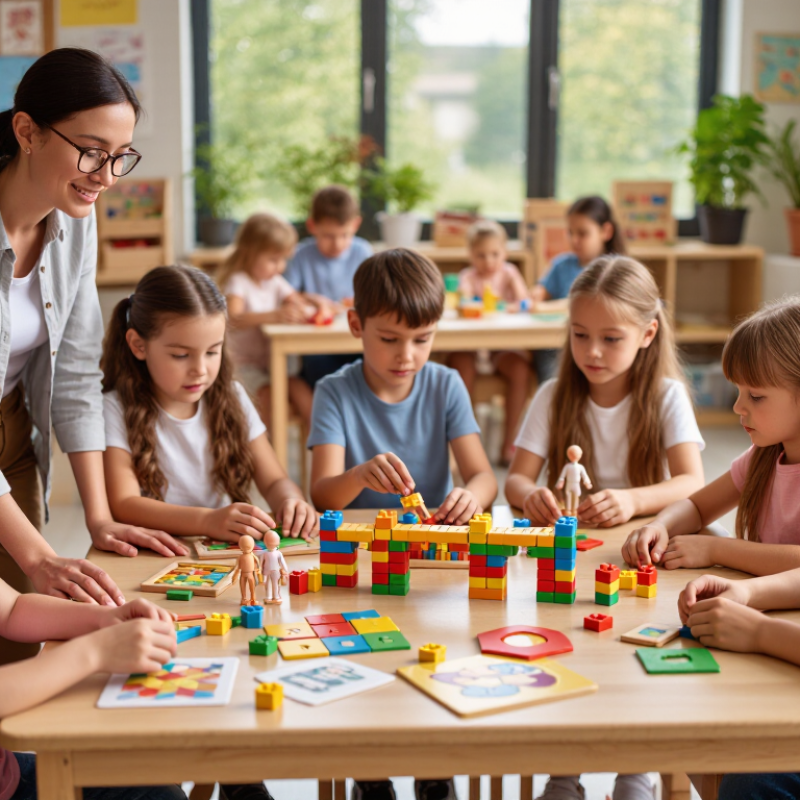
Educational toys are purposeful play materials designed to help children practice specific skills. They may include counting blocks, letter tiles, puzzles, building pieces, or role-play objects. Unlike ordinary entertainment toys, they connect play with a clear learning goal. A well-chosen toy gives children something to touch, move, compare, and explain. Learning becomes visible.
In classroom observations, I have seen counting blocks make number patterns easier to discuss. Children can separate six blocks into two groups of three. They can also correct their own mistakes without waiting for an answer. Letter tiles support sound recognition, spelling, and early word building. Puzzles encourage visual reasoning, patience, and flexible thinking. Building materials can introduce balance, planning, and simple problem-solving. These activities also create natural opportunities for speaking and cooperation.
The teacher’s role remains essential. A toy does not teach effectively by itself. Teachers need to model safe use, ask focused questions, and adjust challenges for different learners. One child may need larger pieces or extra time. Another may need a more complex task. Not every toy works well. Some are too distracting, and some offer little room for thinking. I have also noticed that noisy materials can reduce attention during group lessons. That weakness deserves honest review. Teachers can observe participation, listen to children’s explanations, and record progress through simple classroom notes. This evidence helps them decide whether a toy supports learning or merely fills time.
Educational toys give children hands-on opportunities to practise academic, motor, creative, and social skills. The chart shows how many of five common classroom learning domains are directly engaged by each type of toy.
Learning domains: numeracy, language and communication, STEM inquiry, fine-motor development, and social-emotional learning. These are planning-guide counts rather than test scores; the learning benefit depends on the activity design and teacher support.
In a busy classroom, an educational toy can turn an abstract idea into something children can touch. During a sorting activity, students compare color, size, and shape while explaining their choices. This small routine builds attention, memory, language, and early reasoning. Teachers can observe more than correct answers. They can notice hesitation, persistence, and changing strategies. That observation matters. A child who repeatedly rebuilds a tower may be practicing planning, not simply playing.
Educational toys also create natural social practice. Two children sharing construction pieces must negotiate roles, wait, and repair misunderstandings. A cooperative puzzle encourages them to listen before moving a piece. These moments develop self-control and perspective-taking, skills associated with healthier classroom relationships. Clear rules help, but adults should avoid solving every disagreement. Guided questions, such as “What could you try together?” leave room for children’s voices. Quiet students sometimes contribute more when the activity feels less like a test.
The learning is not automatic. A colorful toy may distract students or reward speed over careful thinking. Teachers need purposeful choices, suitable challenge, and time for reflection. Short notes about student behavior can improve future planning and reveal unequal participation. Some children need visual instructions; others need tactile access or a quieter partner. Even well-designed activities can miss a child’s interest. That is a useful warning, not a failure. When teachers adjust the task, toys become tools for cognitive growth and respectful social learning.
| Developmental Dimension | Educational Toy or Material | How It Supports Learning | Cognitive or Social Skill Developed | Observable Classroom Behavior | Typical Age Range |
|---|---|---|---|---|---|
| Problem Solving | Puzzles, sorting games, and construction pieces | Children test ideas, recognize patterns, adjust strategies, and work toward a specific solution. | Reasoning, planning, spatial awareness, and flexible thinking | Attempts more than one strategy and explains why a solution works. | 3–8 years |
| Early Mathematics | Counting objects, pattern blocks, number tiles, and balance scales | Hands-on materials connect abstract numbers and quantities with visible, manipulable objects. | Counting, classification, comparison, pattern recognition, and measurement | Sorts objects by attributes, compares quantities, and describes patterns. | 3–7 years |
| Language and Literacy | Story props, puppets, picture cards, and letter manipulatives | Representational play encourages children to name objects, sequence events, ask questions, and retell stories. | Vocabulary, narrative structure, listening, phonological awareness, and communication | Uses new words, takes turns speaking, and retells events in a logical order. | 3–8 years |
| Executive Function | Memory games, sequencing cards, rule-based games, and multi-step building tasks | Games with rules and sequences require children to remember information, control impulses, and complete tasks. | Working memory, attention control, self-regulation, and cognitive flexibility | Waits for instructions, follows steps, changes plans, and persists after mistakes. | 4–10 years |
| Social Cooperation | Cooperative board games, shared construction materials, and group challenges | Shared goals create natural opportunities to negotiate roles, follow common rules, and solve disagreements. | Turn-taking, cooperation, perspective-taking, and conflict resolution | Shares materials, listens to peers, asks for help, and reaches group decisions. | 4–10 years |
| Creativity and Imagination | Open-ended blocks, art materials, dramatic-play objects, and loose parts | Materials with more than one possible use allow children to generate ideas and express understanding in different forms. | Divergent thinking, symbolic representation, communication, and innovation | Creates original structures or stories and explains the meaning of the work. | 3–10 years |
| Science and Inquiry | Magnets, ramps, water-play tools, balance equipment, and simple building sets | Children manipulate variables, make predictions, observe results, and discuss cause-and-effect relationships. | Observation, prediction, testing, evidence-based reasoning, and curiosity | Makes a prediction, records or describes results, and revises an explanation. | 4–10 years |
| Fine-Motor Development | Pegboards, threading materials, modeling dough, tweezers, and small construction pieces | Grasping, pinching, rotating, and placing objects strengthen hand control needed for classroom tasks. | Hand–eye coordination, dexterity, visual-motor integration, and task control | Manipulates tools more accurately and shows improved control during drawing or writing. | 3–7 years |
| Emotional Development | Dolls, role-play materials, emotion cards, and cooperative story scenarios | Pretend play provides a safe setting for children to explore feelings, social roles, and possible responses. | Empathy, emotional vocabulary, self-expression, and perspective-taking | Identifies feelings, considers another person’s viewpoint, and practices calming strategies. | 3–8 years |
Note: Educational toys are most effective when they are developmentally appropriate, accessible to all learners, connected to clear learning goals, and supported by purposeful teacher guidance.
Teachers use educational toys to turn abstract ideas into visible actions. In mathematics, students build fraction walls with colored tiles. They compare one-half with two-fourths by placing pieces side by side. Small blocks also help younger learners practice counting, grouping, and simple subtraction. The teacher watches their choices and asks, “How do you know?” This question reveals understanding better than a guessed answer.
Science lessons often use models, magnets, gears, and balance tools. Students can test which objects sink, attract, or move faster. They record predictions before touching the materials. That small pause supports careful reasoning. In language classes, letter tiles help children form words and change one sound at a time. Story cards encourage them to arrange events, describe emotions, and speak in complete sentences.
Social studies teachers may use maps, figures, and classroom role-play. A student can plan a trade route or represent a community decision. These activities make unfamiliar systems easier to discuss. However, toys do not automatically improve learning. Some children focus on bright colors instead of the lesson. I have also seen activities become noisy and rushed. Teachers need clear rules, short tasks, and time for reflection. Sometimes a plain set of counters works better than an elaborate kit. That is worth remembering.
Educational toys can make learning feel active rather than distant. A child who moves letter tiles, builds patterns, or sorts picture cards receives immediate feedback. The hands stay busy. The mind stays involved.
In a primary classroom, play-based activities often increase participation because students can choose, test, and revise their ideas. A math game may ask learners to group counters, explain a strategy, and compare answers with a partner. This creates natural opportunities for speaking and problem-solving. Teachers can observe these moments and identify misconceptions more clearly than through a silent worksheet. However, play alone does not guarantee learning. The task needs a clear purpose, suitable difficulty, and thoughtful guidance. Without these elements, students may focus only on winning or making noise.
Educational toys also support different learning needs. Visual learners may benefit from colored shapes, while students developing language can use role-play to practice new words. Short rounds help maintain attention, especially after a demanding lesson. Yet some children feel uncomfortable with competition, and others may need extra time to join group play. I have seen carefully planned activities exclude quiet students when the rules move too quickly. That weakness deserves reflection. Teachers can offer individual roles, simplify instructions, and allow students to explain their thinking in drawings or speech. Small adjustments often make engagement more genuine.
Schools choose educational toys carefully because classroom time, space, and budgets are limited. A toy should support a clear learning goal, not simply keep children busy. Teachers may select building pieces for spatial reasoning, sorting sets for early mathematics, or role-play materials for language practice. The connection must be visible.
Safety comes first. Staff check for strong construction, smooth edges, secure parts, and suitable materials. They also consider choking risks, cleaning routines, and storage needs. Age suitability matters, but it is not always obvious. Some children need simpler instructions, while others need greater challenge. An accessible design can support learners with different physical, sensory, or communication needs.
Evidence also influences purchasing decisions. Schools may review teacher observations, curriculum guidance, and independent safety information. Durability is practical. A toy used by twenty children each week must survive repeated handling. Cost matters too. The cheapest option may require frequent replacement. A more durable choice can reduce waste over time.
Teachers watch what happens after the toy enters the room. Do children cooperate, explain ideas, and solve problems? Or do they only compete for the brightest pieces? Not every attractive toy produces meaningful learning. No choice is perfect. Cultural relevance, classroom noise, and limited storage can be overlooked during planning. Regular reflection helps schools adjust their choices instead of trusting a checklist forever.
During sorting, children compare color, size, and shape while explaining their choices. These actions strengthen attention, memory, language, and early reasoning. A rebuilt tower may show planning, not mere play.
Shared construction pieces create small negotiations. Children wait, divide roles, listen, and repair misunderstandings. Cooperative puzzles also build perspective-taking. Not every child speaks equally.
Teachers should observe strategies, not only correct answers. They can ask, “What could you try together?” Adults should guide without solving every disagreement. Sometimes, less intervention works better.
No. Bright pieces may distract children or reward speed instead of careful thinking. A quiet, simple activity can produce deeper discussion. Attractive is not the same as useful.
Schools should connect each toy to a clear learning goal. Building pieces may support spatial reasoning, while role-play materials encourage language. The connection should be visible.
Staff should check strong construction, smooth edges, secure parts, and suitable materials. They should also consider choking risks, cleaning, and storage. Some children need visual instructions, tactile access, or a quieter partner.
Teachers can record who participates, cooperates, explains ideas, and solves problems. Short notes reveal hesitation and unequal participation. One activity may look successful while a quiet child remains excluded.
Yes. A toy used by twenty children weekly must survive repeated handling. The cheapest choice may need frequent replacement. A durable option can reduce waste, though no purchase is perfect.
Educational toys are purposeful tools designed to make learning more active, understandable, and enjoyable. They may include puzzles, building materials, counting objects, language games, science models, and creative activity sets. Why do schools use educational toys in classrooms? These resources help students practice problem-solving, memory, communication, coordination, and decision-making through hands-on experiences. When children play together, they also learn to share, cooperate, listen, negotiate, and respect different ideas.
Teachers can use educational toys in many subjects, such as mathematics, reading, science, art, and social studies. Play-based activities often increase student engagement because they allow learners to explore concepts, make choices, and learn from mistakes in a supportive setting. However, schools must consider safety, age suitability, educational value, durability, accessibility, classroom space, and cost when selecting toys. The best choices connect clearly with learning goals while encouraging creativity, inclusion, and meaningful participation.

Osfor Toy