What makes a toy educational in 2026 is not the number of buttons, lessons, or claims printed on its box. It is what a child can do with it. A set of wooden blocks can invite counting, balancing, storytelling, and repeated experiments on a living-room rug. A toy that gives one fixed answer may hold attention briefly, yet leave little room for a child’s own ideas. Child-development educator Fred Rogers captured the value of play: “Play is often talked about as if it were a relief from serious learning. But for children play is serious learning.” That remains a useful test for parents, teachers, and designers.
Look beyond bright packaging. Does the toy suit the child’s age and abilities? Can children make choices, solve a small problem, or play together? Does it offer feedback without taking over? These questions connect “what makes a toy educational” to observable play, not marketing language. In 2026, digital features may add useful prompts, but they should not replace handling, conversation, or imagination. A screen can show a shape; a child can turn a real block, feel its weight, and discover where it fits.
There is no perfect toy. Some children will ignore a popular learning set, and that matters. Watch what they actually do. The best evidence may be a curious pause, a new question, or one more attempt after the tower falls.
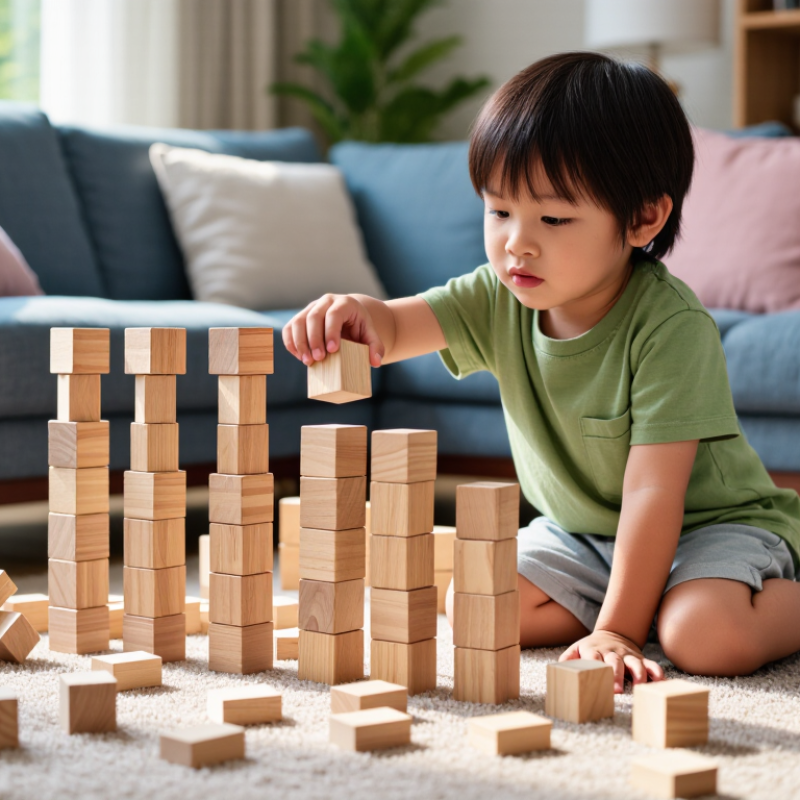
An educational toy gives a child something meaningful to do, not just something to watch. It encourages active choices, such as fitting a shape into a matching space or changing a tower after it tips. These small experiments build problem-solving skills and help children notice cause and effect. The best toys make room for mistakes. A piece that will not fit can prompt another try, without flashing lights or a voice giving away the answer. Simple feedback helps. Children can see what changed when they turn a gear or move a counter.
Core features include clear goals, manageable challenges, and ways to play at different levels. A sorting game might begin with colors, then invite children to sort by size or invent their own rule. That flexibility can keep a toy useful as skills grow. Open-ended materials, like blocks or washable drawing tools, also support imagination and language when children explain what they are making. Access matters: pieces should be comfortable to hold, and instructions should not rely only on reading. Adults can join in with questions, but they do not need to turn play into a lesson. A toy cannot teach everything, and a clever feature may still frustrate a tired child. Watch how the child uses it; that part is easy to overlook.
A toy becomes educational through the learning it invites, not the facts printed on its box. A set of wooden blocks can support spatial reasoning when a child tests balance, compares heights, and rebuilds a wobbly tower. A pretend shop can prompt language, counting, and turn-taking. UNICEF and the LEGO Foundation’s 2018 Learning through Play report describes play as active, engaging, meaningful, iterative, and socially interactive. Those qualities help explain why one toy can support several learning domains at once.
Movement matters, too. The World Health Organization recommends that children aged one to four get at least 180 minutes of physical activity across the day. Push toys, soft balls, and simple obstacle courses can make movement part of play, though a toy alone cannot guarantee healthy activity. Small details matter. Can a child change the rules, solve a small problem, or play with someone else? It is easy to mistake a quiet child for an engaged learner, or a busy toy for a useful one. Some toys simply frustrate. Adults may need to adjust the challenge, then step back and watch what the child actually does.
A toy becomes educational when its challenge matches a child’s current abilities and leaves room to grow.
The CDC’s developmental milestone checklists use skills that at least 75% of children can do by a given age. That benchmark is useful, but it is not a deadline for every child. A two-year-old stacking chunky blocks may be learning balance and persistence; an older child might use the same blocks to plan a bridge. Ages are clues, not verdicts.
Look for a clear action and a meaningful response: a shape that fits, a wheel that turns, or a story prompt that invites a child to explain what happens next.
The American Academy of Pediatrics’ clinical report, “The Power of Play” (2018), describes play as supporting language, social, and cognitive development. For younger children, simple, sturdy objects can invite repeated testing; preschoolers may enjoy sorting, pretend play, and open-ended building.
Adults can help by naming actions and asking calm questions, then allowing time for independent discovery. Not every moment needs a lesson.
A toy that frustrates a child may need an easier starting point—or a pause. That judgment is imperfect, and children develop at different speeds.
In 2026, a toy’s technology matters less than how well it responds to a child. A coding toy might offer a simpler puzzle after repeated mistakes, then add a new challenge when a child succeeds. That feels useful. A screen that merely flashes rewards does not teach much. Adaptability can also be physical: large pieces for small hands, multiple ways to build, and instructions that welcome experimentation.
Evidence calls for care. UNESCO’s 2023 Global Education Monitoring Report describes education technology’s learning impact as mixed and dependent on context. It is not a shortcut. The Common Sense Census: Media Use by Kids Zero to Eight (2020) reported an average of 2 hours and 24 minutes of daily screen-media use among children under eight in 2019. A connected toy should earn its screen time with hands-on activity, conversation, or a real problem to solve.
Adaptability also means adjusting to different abilities and play styles without collecting more data than necessary. UNESCO reported that only 16% of countries explicitly guarantee data privacy in education by law. That finding concerns education systems, not toys, but it underlines a relevant design question: what information does a toy need? A parent should be able to change difficulty, pause digital features, and keep play going offline. Some toys still make setup harder than play. That is worth rethinking.
Technology can add variety to play, but age-appropriate design matters. WHO guidance recommends no sedentary screen time for children under 2 and no more than 60 minutes per day for ages 2–4; less is better. These limits cover screen time overall, not just educational toys.
Source: World Health Organization, Guidelines on physical activity, sedentary behaviour and sleep for children under 5 years of age (2019).
What makes a toy educational in 2026 is not the number of skills printed on its box. It is whether children can explore safely, participate meaningfully, and learn through repeated play. Safety is practical: check that small parts suit the intended age, seams stay intact, and pieces do not become choking hazards when dropped or chewed. The U.S. Consumer Product Safety Commission’s 2023 Toy-Related Deaths and Injuries report estimated 154,700 toy-related emergency-room injuries. That figure makes durability and clear age guidance part of educational design, not afterthoughts. Small details matter.
Inclusion also needs evidence, not cheerful claims. UNICEF’s 2021 report, Seen, Counted, Included, estimates that nearly 240 million children worldwide have disabilities. A useful toy may offer large, easy-grip pieces, tactile cues, or more than one way to complete a task. Yet adding a bright color or a “sensory” label does not prove that a child can use it. Designers should observe children playing, including children with different motor, sensory, and communication needs, then revise what fails. Some tests will still miss real-life frustrations. A piece that works at a quiet table may be hard to manage on a crowded classroom floor. That gap deserves attention.
Wooden blocks can build spatial reasoning as a child compares heights and steadies a wobbly tower. Building together also invites conversation and turn-taking.
The learning comes from what a child does, not from claims printed on a box. Useful play often involves trying, changing, and trying again.
A pretend shop can encourage counting, new words, and taking turns. A small basket and a few play items may be enough.
Children aged one to four are recommended to get at least 180 minutes of physical activity throughout the day. Push toys, soft balls, and simple obstacle courses can help. A toy alone cannot ensure enough movement.
Choose a challenge that feels possible but leaves room to grow. A toddler might stack chunky blocks, while an older child plans a bridge with them. Ages are clues, not deadlines.
Look for actions with clear responses, such as a shape fitting into a hole or a wheel turning. Quiet play can still be engaged play. It is easy to misread.
Make the first step easier, offer a calm question, or pause the activity. Then watch what the child tries. That judgment can be wrong.
No. Naming an action or asking what might happen next can support learning, but children also need time to explore alone. Small steps count.
What makes a toy educational in 2026 is not simply the presence of letters, numbers, or screens, but its ability to encourage active thinking, curiosity, and meaningful practice through play. A well-designed toy can support several learning domains, including language, early math, creativity, problem-solving, social skills, and physical coordination. It gives children opportunities to make choices, test ideas, notice patterns, and learn from mistakes, while keeping the experience enjoyable rather than turning play into a lesson.
Educational value also depends on a child’s age, interests, and stage of development. Toys that offer adjustable challenges or different ways to play can remain useful as a child’s skills grow. Technology may add interactive feedback or flexible activities, but it should support hands-on exploration and real-world interaction, not replace them. Safe, inclusive design helps more children participate, while clear evidence of thoughtful learning goals makes a toy’s educational purpose easier to understand.

Osfor Toy