Choosing educational toys involves more than counting letters, numbers, or colorful buttons. Parents need to ask what makes a safe educational toy before considering its learning value. A useful toy should match a child’s age, abilities, and current interests. It should also invite active play, not simply flash lights or repeat instructions. Safety begins with details. Check for secure battery compartments, smooth edges, strong seams, and parts too large to swallow. Read the age label carefully. It is not decorative.
Dr. Amanda Gummer, a child-development and play expert, states, “A good toy should be safe, fun, and developmentally appropriate.” This short principle guides our discussion. A wooden puzzle, for example, should have non-toxic finishes and pieces that resist splintering. A science kit should provide clear instructions and appropriate materials. Electronic toys need controlled volume levels and durable charging components. These features protect children while supporting curiosity, coordination, language, and problem-solving.
Still, no toy is perfectly risk-free. That deserves honest attention. Even a well-designed product can become unsafe after damage, misuse, or careless storage. Parents should inspect toys regularly, especially after drops, spills, or rough outdoor play. Supervision also matters, although constant observation is unrealistic in busy homes. The safest choice balances tested construction, meaningful play, and practical family habits. This guide examines those choices closely, using expert guidance, product evidence, and real-world details to explain what makes a safe educational toy.
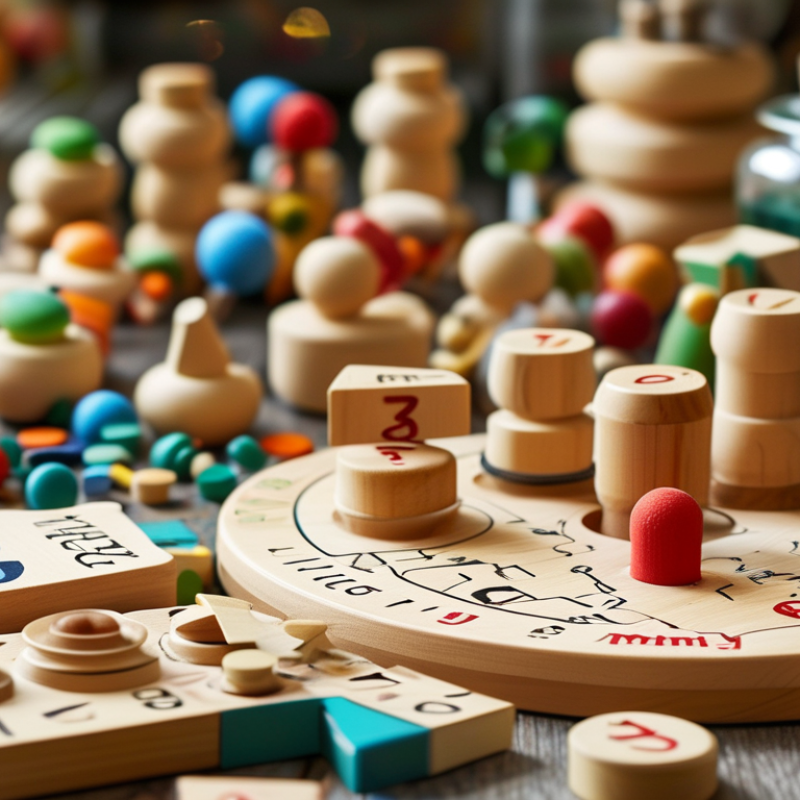
Educational toys are designed to make learning active, visible, and enjoyable. They help children practice skills through play instead of memorizing instructions. A wooden puzzle can strengthen spatial reasoning and patience. Counting tiles can introduce number sense with real, movable objects. A simple building set may develop planning, balance, and early engineering thinking.
Their value depends on how children use them. Educators often look for open-ended toys with more than one possible result. A child might build a bridge, knock it down, and try again. That small failure teaches problem-solving better than instant success. However, not every colorful toy is educational. Some offer flashing lights but little meaningful interaction. I have also noticed that adults sometimes choose toys that impress them, not toys that match a child’s abilities.
Safe educational toys should suit the child’s age, size, and development. They need secure parts, smooth edges, durable materials, and clear safety information. Supervision remains important, especially around small pieces. A toy can be well designed and still become frustrating when its instructions are too advanced. Children need room to explore, make mistakes, and change their ideas. The best choice may look simple: a few pieces on a clean floor, a curious child, and an adult willing to ask questions rather than control the game.
| Toy Category | Typical Age Range | Primary Learning Area | Key Safety Features | Main Safety Risk | Recommended Supervision | Educational Value |
|---|---|---|---|---|---|---|
| Shape Sorters | 12–36 months | Early problem-solving, shape recognition, and hand–eye coordination | Large pieces; smooth, rounded edges; secure construction; no detachable small parts for children under 3 | Choking from small removable pieces | Close supervision for younger toddlers; inspect pieces regularly | Encourages trial and error, categorization, and spatial reasoning |
| Building Blocks | 12 months and older | Fine-motor skills, balance, creativity, and early engineering concepts | Non-toxic finishes; durable, splinter-free material; size appropriate to the child’s age | Choking, splinters, or sharp broken edges | Supervise infants and toddlers; remove damaged blocks | Supports open-ended play, planning, persistence, and three-dimensional thinking |
| Simple Puzzles | 18 months–6 years | Visual discrimination, memory, language, and logical thinking | Large, easy-grip pieces; securely attached knobs; rounded corners; age-appropriate piece count | Small pieces or peeling surfaces | Choose pieces suitable for the child’s developmental stage | Builds concentration, sequencing, visual-spatial skills, and confidence |
| Counting and Sorting Sets | 3–6 years | Early mathematics, counting, patterns, and classification | Large pieces for younger children; non-toxic materials; no accessible magnets or button batteries | Choking or ingestion of small components | Adult guidance is recommended when pieces are small | Turns abstract number concepts into hands-on learning experiences |
| Art and Craft Materials | 3 years and older | Creativity, communication, fine-motor control, and sensory exploration | Non-toxic, washable materials; child-safe tools; secure lids; clear use instructions | Ingestion, eye injury, or misuse of tools | Active adult supervision; use in a well-ventilated, easy-to-clean area | Promotes self-expression, decision-making, and hand strength |
| Board Games | 4 years and older | Language, social skills, strategy, counting, and emotional regulation | Age-labeled components; sturdy game pieces; no loose small parts for children under 3 | Choking or frustration caused by inappropriate difficulty | Play with an adult or older child when rules are complex | Teaches turn-taking, following rules, flexible thinking, and cooperation |
| Science Exploration Kits | 8 years and older | Scientific reasoning, observation, measurement, and evidence-based thinking | Clear instructions; protective equipment where needed; child-appropriate materials; secure storage | Chemical exposure, broken glass, heat, or incorrect use | Direct adult supervision and strict adherence to instructions | Connects scientific concepts with observation, prediction, testing, and discussion |
| Beginner Coding Toys | 5 years and older | Sequencing, computational thinking, planning, and problem-solving | Protected battery compartment; secure fasteners; no exposed wires; privacy-conscious software when connected | Button-battery ingestion, damaged electronics, or excessive screen use | Adult help with batteries, setup, online functions, and balanced use | Makes algorithms, cause and effect, and debugging accessible through play |
They turn play into practical learning. Puzzles improve hand control, spatial awareness, and early problem-solving. Mistakes provide useful feedback.
Building sets encourage planning, balance, and flexible thinking. A child might build a bridge today and a shop tomorrow. Open-ended play matters.
Pretend shops encourage counting, polite requests, and turn-taking. Figures and costumes support storytelling, memory, language, and emotional expression.
Ask open questions, such as, “What could happen next?” Avoid solving everything. Too much direction can limit independent discovery.
Choose toys with several possible uses. Building sets, puzzles, sorting games, and simple role-play materials often support repeated play.
Look for durable, non-toxic, odor-free materials and smooth edges. Avoid loose magnets, sharp points, cracked plastic, and detachable small parts.
The battery compartment should close firmly, preferably with a screw. Sound should feel comfortable. Check the cover after drops or rough play.
Match the toy to the child’s age, abilities, interests, and independence. The most advanced toy may not be the best choice.
Simple objects may inspire longer stories and richer conversations. Toys with many lights and sounds can attract attention briefly, though children differ.
Inspect them regularly, especially after drops. Pull gently on buttons and wheels. Remove any toy showing damage. I sometimes underestimate ordinary misuse.
Educational toys are designed to make learning engaging while helping children build essential skills through play. They can support cognitive development, language, creativity, problem-solving, fine motor coordination, social interaction, and emotional growth. The best toys encourage children to explore, make choices, and learn at a pace suited to their interests and abilities.
A key question for parents and educators is what makes a safe educational toy. A suitable toy should be made from durable, non-toxic materials, contain no dangerous small parts for young children, have secure construction, smooth edges, and clear age recommendations. Choosing age-appropriate toys ensures that the challenge is helpful rather than frustrating or unsafe. Open-ended building sets, puzzles, art materials, counting games, pretend-play tools, and sensory activities often offer lasting value because they can be used in different ways as children’s skills develop. Combining safety, educational purpose, durability, and enjoyment helps make play both meaningful and beneficial.

 Osfor Toy
