Choosing a learning toy is not about finding the loudest gadget or the box with the biggest promise. The best choice fits a child’s age, interests, abilities, and safe play environment. A toddler may learn through stacking cups, soft blocks, and repeated cause-and-effect games. An older child might enjoy a beginner science kit, strategy game, or construction set with room for experimentation. Small details matter: chunky pieces are easier for young hands to grasp, while clear instructions can help older children work more independently.
Parents and caregivers often ask what educational toys are suitable for different age groups. The answer changes as children grow. Babies benefit from safe, simple sensory play; preschoolers often explore language, sorting, and pretend play; school-age children can take on puzzles, coding concepts, and more involved projects. Age labels offer a useful starting point, not a guarantee. A toy that delights one child may frustrate another. That is worth remembering.
This guide considers ten options across different ages, with attention to the skills each toy can encourage and the play it invites. It also looks at practical factors such as durability, supervision, and whether a toy can hold a child’s interest beyond the first afternoon. No toy teaches everything. Some promising products may still feel awkward in real use, and that deserves an honest look. The goal is not to turn every moment into a lesson. It is to find toys that make curiosity easier to follow—one question, careful try, or wobbly tower at a time.
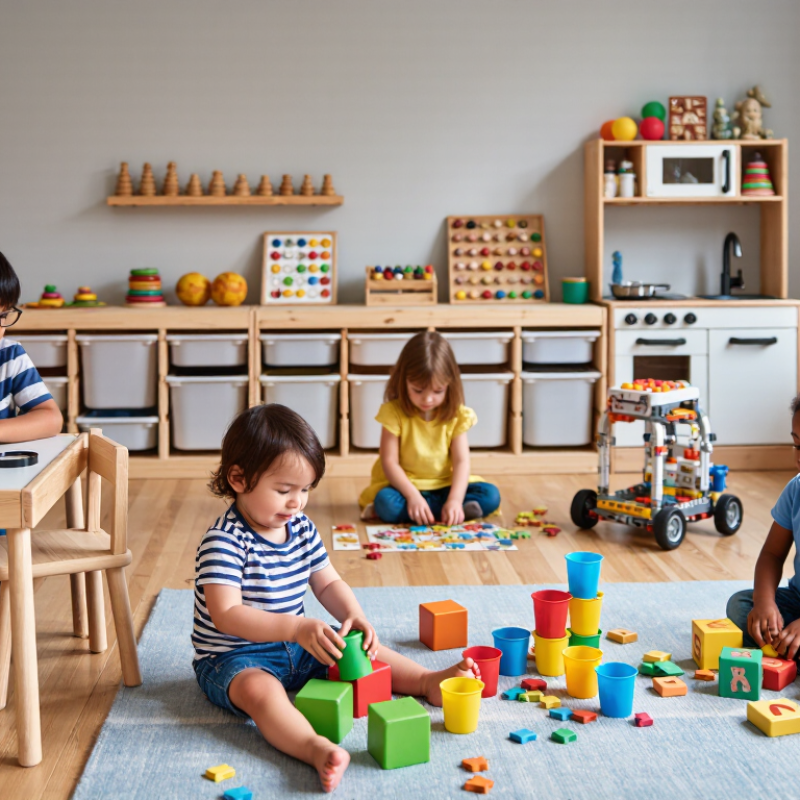
Educational toys support learning when they invite children to do more than watch. A toddler stacking wooden blocks can explore balance, size, and cause and effect. A preschooler sorting buttons by color practices noticing patterns and naming differences. Older children may use puzzles, measuring tools, or simple building sets to test ideas and revise a plan. Play is practice.
The best choice depends on a child’s interests and current abilities, not just age printed on a box. A toy that is too easy may lose its appeal; one that is too difficult can turn curiosity into frustration. Watch what the child does: Do they try another approach, ask questions, or explain their thinking? Those small moments can show what the activity is supporting. Shared play adds language and social learning, especially when adults ask open questions and let children lead. It is easy to step in too quickly. Sometimes the tower falls, and the child needs room to decide what to change. Educational toys can help develop problem-solving, fine-motor skills, creativity, and persistence, but no single toy teaches everything. A cardboard tube or a handful of safe household objects may inspire just as much thoughtful play.
| # | Age Group | Toy Type | Learning Areas | How It Supports Development | Simple Play Idea |
|---|---|---|---|---|---|
| 1 | 0–6 months | High-contrast fabric book | Visual attention, early language, sensory exploration | Bold patterns give babies something easy to focus on. Looking, listening, and touching during shared book time provide opportunities for interaction and early communication. | Show one page at a time, name what you see, and let the baby look or reach. |
| 2 | 6–12 months | Stacking cups | Cause and effect, early problem-solving, hand-eye coordination | Picking up, nesting, and knocking down cups lets babies explore size, movement, and simple cause-and-effect relationships. | Stack a few cups and invite the child to reach for, remove, or nest them. |
| 3 | 1–2 years | Large-piece shape sorter | Shape recognition, spatial reasoning, fine motor skills | Trying different openings encourages children to compare shapes and adjust their actions. Large pieces are easier for young toddlers to grasp. | Name a shape and let the child rotate it until it fits. Choose pieces too large to swallow. |
| 4 | 2–3 years | Chunky interlocking blocks | Creativity, early engineering, spatial language | Building and rebuilding helps children experiment with balance, position, and structure while practicing planning and hand control. | Build a short tower together and compare which structures stand or fall. |
| 5 | 3–4 years | Play dough with simple tools | Fine motor skills, creativity, early math vocabulary | Squeezing, rolling, and shaping dough exercises hand movements. Talking about shapes, sizes, and quantities adds opportunities for language and early math. | Make pretend food and describe each piece as long, round, big, or small. |
| 6 | 4–5 years | Jigsaw puzzle with large pieces | Visual discrimination, persistence, spatial reasoning | Matching edges and pictures encourages children to notice details, test ideas, and keep working toward a goal. | Sort edge pieces first, then work together on one small section. |
| 7 | 5–6 years | Counting and pattern manipulatives | Number sense, sorting, pattern recognition | Moving and grouping objects makes early math ideas concrete, including counting, comparing amounts, and recognizing repeating patterns. | Count a small set of objects or create a simple repeating color pattern. |
| 8 | 6–8 years | Beginner construction set | Design thinking, measurement, problem-solving | Following or adapting a model gives children practice planning, testing structures, and learning from trial and error. | Build a bridge that can hold a small toy, then change the design and test it again. |
| 9 | 8–10 years | Beginner coding or logic game | Sequencing, logical reasoning, debugging | Step-by-step challenges help children practice breaking a problem into parts, predicting outcomes, and revising a plan when it does not work. | Give a character a short sequence of directions and find the step that needs changing. |
| 10 | 10–12 years | Hands-on science experiment kit | Scientific inquiry, observation, data recording | Structured investigations introduce children to making predictions, observing results, and comparing evidence. Adult guidance can help with safe handling and interpretation. | Change one variable in a simple experiment, record what happens, and discuss the result. |
Choose toys suited to a child’s abilities and interests, supervise play as appropriate, and follow age, small-parts, and safety guidance. The age ranges are general suggestions; children develop at different rates.
They let children test ideas through play. Stacking blocks can teach balance, size, and cause and effect.
Follow the child’s interests and current abilities. A puzzle that is too hard may frustrate them; one that is too easy may lose their attention.
Ask open questions and let children lead. Try not to fix the fallen tower too quickly.
Construction pieces, logic puzzles, and building challenges invite children to test and revise ideas. More than one solution helps.
They may like strategy games, model-building, design challenges, or beginner coding activities. Choose options with room to experiment.
A PISA 2022 report found an association between limited school device use and higher mathematics scores. It does not prove devices caused the difference, and it did not study toys.
Notice whether they try another approach, ask questions, or return to it later. Quiet play alone is not always learning.
Not always. A cardboard tube or safe household objects can inspire thoughtful play. No single toy teaches everything.
Educational toys can make learning enjoyable while supporting a child’s thinking, communication, creativity, and physical development. The best choices change as children grow: infants and toddlers benefit from safe, sturdy toys that encourage sensory exploration, movement, and simple cause-and-effect discovery. Preschoolers and early learners are ready for imaginative play, puzzles, building activities, and games that introduce language, numbers, and problem-solving.
For school-age children and teenagers, educational toys can offer more challenging opportunities to explore science, design, strategy, and creative expression. When considering what educational toys are suitable for different age groups, look beyond age labels and consider a child’s interests, abilities, and stage of development. Choose items made from suitable materials, without small parts or other hazards for younger children, and follow age guidance and care instructions. A thoughtful, safe toy can encourage curiosity and meaningful learning at every stage.

 Osfor Toy
