China’s educational toy industry offers many tools for children’s emotional development. These products include emotion cards, role-play puppets, cooperative board games, building blocks, and sensory activity sets. Their value depends on thoughtful design, not simply on colorful packaging or a “learning” label.
So, how do educational toys support emotional development? They give children safe ways to name feelings, practise empathy, and manage frustration. A child might choose a sad-face card after losing a game. Another may use a puppet to explain why a friend feels excluded. Cooperative puzzles also create small moments of negotiation, patience, and shared success. These experiences can make abstract emotional skills easier to understand.
A reliable guide to China’s top educational toys should examine more than popularity. It should consider age suitability, clear instructions, durable materials, choking-risk information, and evidence of meaningful adult guidance. Child development professionals can help assess whether a toy encourages open-ended conversation rather than memorised answers. Teachers and parents also offer practical evidence through repeated use at home or in classrooms. Still, no toy can guarantee emotional growth. That assumption needs careful reflection. A beautifully designed emotion game may fail if adults rush the child or correct every response. Some children may also dislike bright sounds, competitive rules, or unfamiliar characters. The strongest choices leave room for quiet play, cultural sensitivity, and different emotional speeds. This introduction explores promising Chinese educational toys through those practical, developmental, and safety-focused perspectives.
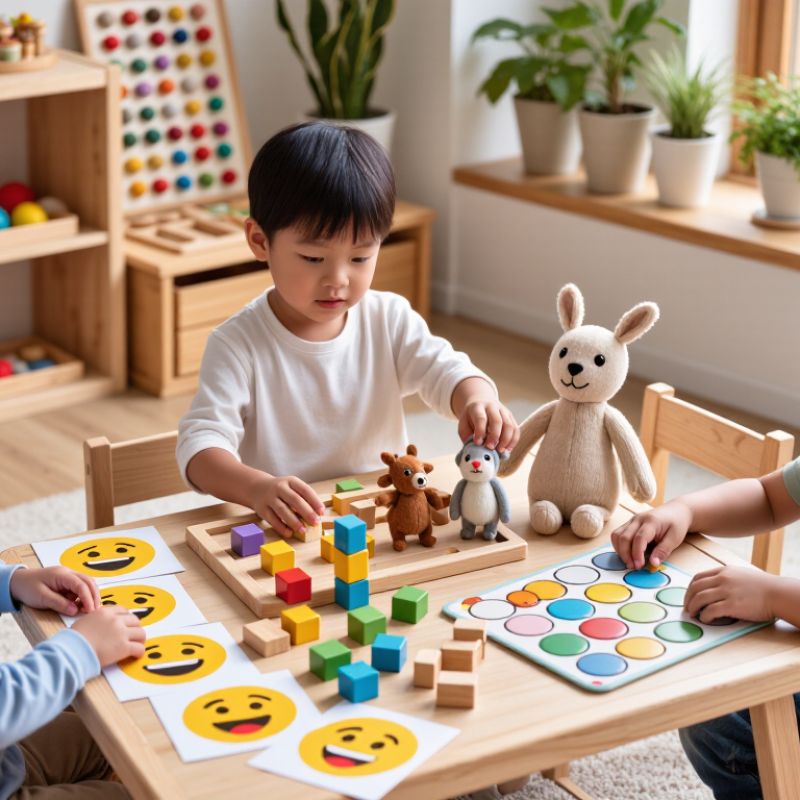
Emotional development means more than making children feel happy. It includes recognizing feelings, naming them, managing frustration, showing empathy, and cooperating with others. The OECD’s 2023 Survey on Social and Emotional Skills assessed these abilities among 10- and 15-year-olds across international education systems. Its framework highlights self-control, emotional regulation, empathy, and cooperation as measurable life skills.
The need is significant. UNICEF’s State of the World’s Children 2021 reports that more than one in seven adolescents aged 10–19 globally lives with a diagnosed mental health condition. Educational toys cannot solve this problem. That claim is too neat. However, carefully designed play can create small practice moments. A child may match a worried face card, explain the feeling, then choose a calming action. Another child may wait while a partner completes a shared building task.
Useful products should show emotional situations without forcing one “correct” response. A cooperative puzzle, role-play kit, or story-based card set can encourage conversation. Clear instructions matter, especially for parents and teachers using bilingual materials in China. Adults should watch behavior, not only finished results. Can the child name disappointment? Can they restart after the tower falls? Progress may look quiet. Data from one play session proves very little, so manufacturers and educators should avoid exaggerated developmental claims. Emotional learning needs repeated use, sensitive adult guidance, and room for imperfect answers.
China’s top emotional learning toys increasingly combine play with practical social-emotional skills. UNICEF’s 2021 State of the World’s Children report found that one in seven adolescents experiences a mental health condition. This makes emotional literacy more than a classroom trend.
Strong designs use emotion cards, expressive faces, role-play figures, and simple story prompts. Children can match a red face with anger, then choose calming actions. Tactile pieces also help younger children engage without reading. Open-ended play matters. It allows different answers.
Clear instructions support parents and teachers. Multiple languages improve accessibility in international markets. Durable materials, rounded edges, and documented safety testing remain essential. China’s manufacturing strength can support consistent components and scalable customization. However, production speed should not replace developmental review. A colorful toy may still offer shallow learning.
Research from the Collaborative for Academic, Social, and Emotional Learning links social-emotional learning with improved academic performance and classroom behavior. Yet a toy cannot diagnose anxiety or replace professional support. Some products still treat every feeling as easily solved. Real emotions are messier. Designers should include quiet choices, imperfect outcomes, and opportunities to repair misunderstandings. This better reflects children’s daily experiences. Parents can observe whether a child names feelings, listens, waits, or asks for help during play.
China Top Educational Toys for Emotional Development?
Puppets and storytelling cards are also useful. Children can give a paper character a worried voice, an angry face, or a brave ending. Caregivers can ask, “What could help here?” without forcing one correct answer.
Traditional-inspired toys, such as shadow puppets, paper figures, and tangrams, invite shared storytelling and patient cooperation. Building toys add another emotional lesson: children must negotiate when a tower falls or pieces are shared. Small conflicts matter.
In practice, results are uneven. Some children talk freely through puppets; others prefer quiet construction. A toy cannot teach empathy alone. Adult modelling, calm questions, and repeated play remain important. One limitation deserves attention: emotional skills are difficult to measure after one activity. Watch daily behaviour over time, including how children respond to mistakes, exclusion, and repair.
China’s top educational toys increasingly support social and emotional growth through play. Well-designed puzzles, role-play sets, and cooperative games give children safe ways to express feelings. A child may use a toy doctor’s kit to comfort a “patient,” then practice gentle words with a parent or friend. These small scenes help children recognize emotions, negotiate roles, and respond with empathy.
In classroom observations, cooperative building activities often reveal more than academic skills. Children learn to share pieces, wait for turns, and handle disappointment when a tower falls. Emotion cards can also help children name feelings such as worry, anger, or pride.
Naming a feeling does not remove it. However, it can make a difficult moment easier to discuss. Adults should model calm language and avoid forcing children to perform emotions for praise.
The strongest toys usually allow open-ended play rather than one correct answer. A simple puppet can become a lonely child, a nervous traveler, or a caring friend. Parents and teachers can ask, “What could help?” instead of providing every solution. Results are not always immediate. Some children withdraw, argue, or misuse the toy during early sessions. That response still offers useful information. It may show that the activity needs fewer rules, shorter play periods, or more patient adult guidance. Safe materials, clear age guidance, and culturally respectful stories also matter when choosing toys for emotional development.
China Top Educational Toys for Emotional Development?
Choosing Safe and Effective Emotional Development Toys
When choosing toys from China, emotional value should not replace safety. Check the recommended age, material details, and testing documents before purchase. Inspect seams, paint, batteries, magnets, and detachable parts with your hands. Small pieces can become serious hazards for young children.
Effective emotional-development toys invite children to name feelings, practice turn-taking, or calm their bodies. A soft doll, picture card set, or role-play kit can support these moments. Look for rounded edges, washable surfaces, clear instructions, and sturdy construction. The best toy does not demand one correct emotional response. It leaves room for a child to say, “I feel angry,” without being corrected immediately.
Observe how the child uses it. Does the toy encourage conversation, or does it create noise and frustration? A quiet corner, two simple figures, and a few emotion cards may work better than a crowded electronic set. Adults can model language such as, “Your hands are tight; shall we breathe slowly?” Results vary. Some toys seem promising but remain untouched. That is useful feedback, not failure. Review the design, the child’s interests, and the setting, then adjust carefully. Safety checks should continue after washing, dropping, or repeated play.
Age-based toy planning guide using CDC social-emotional developmental milestones
Feelings books and emotion cards can support children in recognizing emotions. Pretend-play toys encourage role-play and perspective-taking, while cooperative games provide opportunities to practice turn-taking and following rules. These age references are planning guides, not guarantees that a toy will cause a developmental milestone.
Safety reminder: Select toys labeled for the child’s age, avoid small parts for children under three, choose durable non-toxic materials, and inspect toys regularly for damage.
Source: U.S. Centers for Disease Control and Prevention, Developmental Milestones, ages 2–5.
It includes recognizing feelings, naming them, managing frustration, showing empathy, and cooperating. Happiness is only one part.
No. That claim is too neat. Toys create small practice moments, not complete solutions.
Role-play sets, puppets, storytelling cards, cooperative games, and building toys can help. Their value depends on shared use.
Children may comfort a crying figure or explain its feelings. Adults can ask what might help without demanding one answer.
They can practise turn-taking, waiting, negotiation, and handling disappointment. Keep games short. Long games may increase frustration.
Use calm questions and model clear language. Say, “Your hands are tight; shall we breathe slowly?” Watch behavior, not only results.
Check age guidance, materials, testing documents, seams, paint, batteries, magnets, and detachable parts. Small pieces can become serious hazards.
Observe daily behavior over time, including responses to mistakes, exclusion, and repair. One play session proves very little.
Choose rounded edges, washable surfaces, clear instructions, and sturdy construction. A quiet corner may work better than a crowded electronic set.
Treat that as useful feedback, not failure. Reconsider the child’s interests, the setting, and the toy’s design. Some plans simply miss.
China’s top educational toys for emotional development are designed to help children recognize, express, and manage their feelings while learning through play. Emotional development in educational toys includes building self-awareness, empathy, communication, patience, and problem-solving skills. Key features may include emotion cards, storytelling elements, cooperative activities, role-play, facial expression matching, and situations that encourage children to make thoughtful choices. These toys can turn everyday play into opportunities for children to understand emotions and respond respectfully to others.
So, how do educational toys support emotional development? They create safe, enjoyable situations where children can practice sharing, taking turns, handling frustration, and resolving simple conflicts. Chinese toys that support these skills may include puzzles, board games, pretend-play sets, dolls, interactive books, and social scenario kits. When choosing such toys, parents and educators should consider age-appropriate design, durable materials, clear instructions, non-toxic components, and activities that encourage positive interaction rather than competition alone.

Osfor Toy