In 2026, parents face shelves of toys promising brighter minds, stronger skills, and faster learning. But how do educational toys support child development in everyday life? The answer is less about flashy features and more about what children do with them. A set of wooden blocks can invite a toddler to stack, test balance, and try again. A simple matching game can encourage a preschooler to notice shapes and explain a choice. Small moments matter.
Child-development advocate Fred Rogers captured the value of play: “Play is often talked about as if it were a relief from serious learning. But for children, play is serious learning.” Educational toys can support curiosity, language, problem-solving, and social interaction when they suit a child’s age and invite active play. A caregiver asking, “What do you think will happen?” can turn a toy into a shared learning moment. No toy works like magic. Children develop at different rates, and a toy’s label cannot guarantee progress. Some toys are simply fun—and that is not a failure. This guide explores what educational toys can support, how to choose them thoughtfully, and where adult attention matters more than another feature. It also leaves room for an honest question: are we choosing toys for children’s needs, or for our hopes?
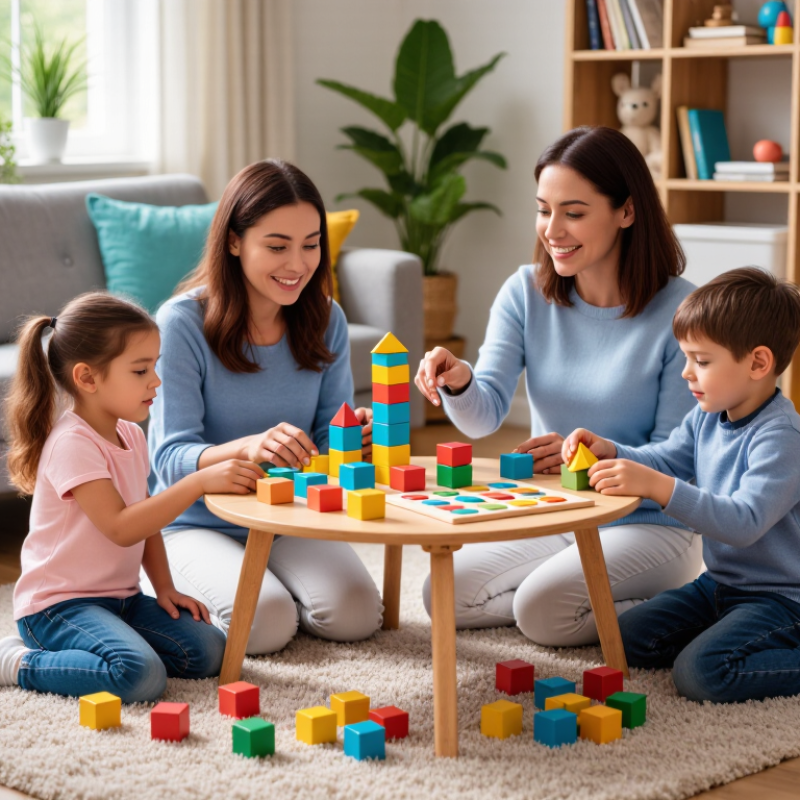
Educational toys are designed with a learning goal in mind: sorting shapes, matching sounds, building spatial skills, or practicing turn-taking. A wooden puzzle, for example, may encourage a child to rotate pieces, notice edges, and try again after a mismatch. Ordinary toys can support these same abilities, even when learning is not their main purpose. A blanket can become a cape; a row of toy animals can spark counting and storytelling. The difference is usually intention, not a strict divide. Not always. A toy’s label alone cannot show how a child will use it.
In 2026, a useful way to assess an educational toy is to look at what children actually do with it. Does it invite them to make choices, test ideas, or explain what they notice? A simple stacking set may offer more room for experimentation than a toy that performs every action for the child. Clear instructions can help, but children also need time to explore without being corrected at every turn. Adults can observe, ask one gentle question, and then step back. There is no perfect toy, and a child may ignore a carefully chosen learning activity. That is worth considering: play depends on interest, readiness, and the freedom to use an object in unexpected ways.
| Dimension | Educational Toys | Ordinary Toys | Developmental Relevance |
|---|---|---|---|
| Primary design purpose | Designed with an identifiable learning or developmental goal, such as sorting, building, storytelling, or practicing a skill. | Designed primarily for enjoyment, imaginative play, movement, or entertainment; learning may still happen through play. | A toy’s label does not determine its value. Children can learn from many kinds of play materials. |
| Typical play activity | Often invites children to solve a problem, match, sequence, construct, experiment, or create. | May invite open-ended pretend play, physical activity, sensory exploration, or simple enjoyment. | Hands-on play can give children opportunities to practice thinking, communication, coordination, and creativity. |
| Thinking and problem-solving | Puzzles, shape sorters, and building materials can encourage comparison, planning, spatial reasoning, and trial and error. | Vehicles, figures, or pretend-play props can also prompt planning and problem-solving when children decide how to use them. | The challenge should be manageable for the child, with room to explore different solutions. |
| Language and literacy | Picture cards, alphabet materials, and story-making props can support naming, vocabulary, sound awareness, and storytelling. | Dolls, figures, and everyday pretend-play items can prompt conversation, role-play, and narrative language. | Talking, asking questions, and sharing stories during play can make language practice more meaningful. |
| Fine-motor and coordination practice | Threading beads, stacking blocks, and using child-safe tools can invite controlled hand and finger movements. | Small play objects, art materials, and many active-play toys may also involve grasping, reaching, or coordinated movement. | Choose materials suited to a child’s abilities and follow age and safety guidance, especially for small parts. |
| Creativity and imagination | Open-ended educational materials, such as blocks or art supplies, can support invention as well as targeted practice. | Costumes, figures, and pretend-play sets often provide prompts for imaginative scenarios. | Open-ended play allows children to make choices and develop their own ideas, regardless of the toy category. |
| Feedback and structure | Some toys provide clear goals or feedback, such as fitting a piece into a matching space; others are open-ended. | Many toys have no built-in goal or feedback, leaving children to decide how play unfolds. | Both structured and child-led play can be useful; the right balance depends on the child and activity. |
| Adult involvement | An adult can demonstrate a new use, ask guiding questions, or adjust the challenge without taking over. | An adult can join, talk, and follow the child’s ideas without needing to teach a specific skill. | Warm, responsive interaction can enrich play, but children also benefit from opportunities to explore independently. |
| Choosing a suitable toy | Look for a clear, age-appropriate activity that matches the child’s interests and offers room to progress. | Look for safe, durable materials that invite enjoyable play and suit the child’s interests. | Check manufacturer age guidance, choking hazards, and relevant safety instructions. No single toy guarantees a developmental outcome. |
Note: “Educational” and “ordinary” are not mutually exclusive categories. A toy can be entertaining and support learning at the same time; how a child uses it matters.
Safe textures, bright contrasts, and gentle sounds invite babies to notice their surroundings. Caregivers can name what they see. Small steps matter.
Stacking cups, shape sorters, and simple objects give toddlers chances to repeat actions. These activities can support coordination and early problem-solving. Results vary.
Pretend kitchens, animal figures, and blocks can support storytelling and cooperation. A cardboard box might become a bus with passengers.
Construction sets, puzzles, and board games can invite planning, patience, and flexible thinking. Some children may not care for them.
Treat age guidance as a starting point, not a verdict. Watch the child’s abilities and play style, and check small parts carefully.
No. Milestone lists describe skills many children show by certain ages, but children develop on different schedules. Observe the child directly.
Sit nearby and ask, “What happens next?” Then leave room for the child to lead. Too much help can make play feel like a test.
A simple toy may still comfort a child or support familiar play. If frustration or boredom appears, adjust the challenge—or try an ordinary box. Maybe the toy isn’t the issue.
Educational toys are designed to make learning part of play, unlike toys whose main purpose is simply to entertain. They invite children to explore ideas, solve problems, create, and interact. Through activities such as building, sorting, storytelling, and pretend play, children can develop language, early math skills, coordination, creativity, emotional awareness, and cooperation. In this way, how do educational toys support child development? They offer enjoyable opportunities to practise skills at a child’s own pace, with room to experiment and learn from mistakes.
The benefits shift as children grow: younger children often learn through sensory discovery and simple cause and effect, while older children can take on more complex challenges and collaborative projects. Choose toys that match a child’s age, interests, abilities, and current learning needs, rather than relying on age labels alone. In 2026, thoughtful choices also consider sturdy, age-appropriate design, clear guidance for digital features, balanced screen use, and inclusive options that welcome different abilities, backgrounds, and ways of learning.

 Osfor Toy