Children rarely develop critical thinking by memorizing answers from a screen or worksheet. They need chances to question, test, revise, and explain their choices. This is where educational toys can become practical learning tools. A wooden tangram, for example, presents several shapes but no single obvious solution. A child rotates each piece, notices gaps, and changes direction after failure. These small decisions involve reasoning, visual analysis, patience, and flexible thinking. So, how do educational toys encourage critical thinking? They create hands-on problems that make children active participants rather than passive recipients.
Building blocks, logic puzzles, science kits, and programmable robots can support this process in different ways. Blocks encourage planning and structural judgment. Puzzles invite comparison and pattern recognition. Simple robots introduce sequences, prediction, and cause-and-effect relationships. Developmental educators often emphasize open-ended play because children must explain their methods, not merely reach an expected result. Adult guidance also matters. A thoughtful question such as “What could you change?” may encourage deeper reflection than giving a quick solution. Not every toy labeled “educational” delivers these benefits. Some offer repetitive tasks, distracting lights, or narrow answers. The toy alone cannot guarantee thoughtful learning. Children may also abandon a challenging activity before gaining much from it. Observing their reactions is essential. This article examines the design features, play experiences, and adult interactions that make educational toys more effective for developing independent, careful, and curious thinkers.
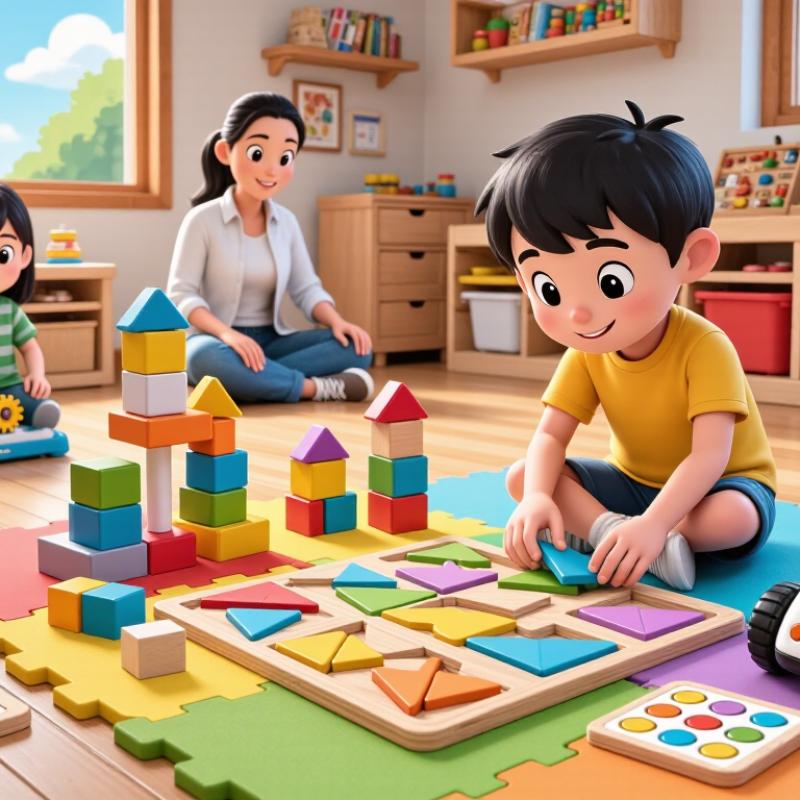
Educational toys are play materials designed to build specific skills through active exploration. They may include puzzles, counting sets, construction pieces, pattern games, or science kits. Unlike passive entertainment, these toys ask children to make choices and test ideas. A child arranging blocks may notice balance, sequence, and cause and effect. When a tower falls, the child receives immediate evidence, not a lecture. That small failure can prompt a new plan. Critical thinking grows through this cycle: observe, predict, act, and revise. The process matters more than producing a perfect answer.
In homes and classrooms, adults can support learning by asking open questions. “What might happen if this piece moves?” encourages prediction. “Why did you choose that shape?” reveals reasoning. These conversations help children explain evidence and compare solutions. Good educational toys usually allow more than one approach. An open-ended building task can develop spatial awareness, planning, and flexible thinking. Simple counting materials can support early mathematics when children group, estimate, and check quantities. However, a toy does not automatically create deep learning. I have seen children follow instructions mechanically, while adults praise speed instead of thought. Guidance must leave room for struggle, curiosity, and occasional wrong turns.
Tips: Choose toys that match the child’s current ability, with a small challenge included. Watch before helping. Ask one clear question, then wait. Invite the child to draw or explain a solution. If frustration rises, reduce the task without removing the decision. Keep notes on strategies, not just finished results. Some toys may seem educational but offer little choice, so inspect how children actually use them.
Play-based challenges turn critical thinking into something children can touch, test, and revise. A child studying a balance puzzle may notice that a heavier block changes the center of gravity. They predict, place, observe, and adjust. This simple cycle develops evidence-based reasoning without requiring a worksheet. The OECD’s PISA 2022 Creative Thinking assessment reported an average score of 33 points across participating OECD education systems. Such findings reinforce the need to practise flexible thinking early, not only measure it later.
Good educational toys create small problems with several possible solutions. Building a bridge for a toy vehicle encourages children to compare length, weight, and stability. Sorting objects by texture or shape strengthens observation when the differences are subtle. In classroom observations, children often explain their choices more clearly after touching and moving materials. The World Economic Forum’s Future of Jobs Report 2023 identified analytical thinking as a core skill for 72% of surveyed companies. However, play does not automatically produce deep reasoning. A toy can become repetitive, and adult instructions can remove the useful struggle. I have seen children abandon a challenge when the answer is revealed too quickly. Better support uses questions such as, “What changed?” or “What could you try next?” Children need room to be wrong. They also need time.
Open-ended toys encourage children to create problems before solving them. A box of wooden pieces can become a bridge, animal shelter, or strange machine. There is no single correct result. Children must decide what to build, test whether it works, and change their plans when it falls apart. This process strengthens flexible thinking and supports critical thinking through real decisions. A child may notice that a tall tower leans, then remove one block and try again. The reasoning is simple, but meaningful.
In playroom observations, children often explain their ideas while building. “This part needs support,” one child might say. Another may suggest a different design. These conversations develop communication and respectful disagreement. Educational research commonly links imaginative play with problem-solving, self-regulation, and creativity, although results can vary by age, setting, and adult involvement. Not every play session is productive. Sometimes children repeat the same design or abandon it quickly. That is not failure. It may show that the challenge is too easy, too difficult, or poorly timed.
Tips: Offer loose materials with different shapes, weights, and textures. Ask, “What could you change?” rather than giving immediate solutions. Leave quiet space for thinking. Accept unusual ideas, even when the final structure looks unstable. Adults should observe before helping, because too much guidance can narrow exploration. Still, a small prompt can help a frustrated child continue: “What might make the base stronger?” Photographing several attempts can also help children notice their own changes, though some children may feel pressured by constant recording.
Evidence-informed overview of how different open-ended play materials support reasoning, creativity, and flexible thinking.
| Toy or Material Type | Open-Ended Feature | Critical-Thinking Process | Creativity and Flexible-Thinking Outcome | Observable Behaviors | Helpful Adult Prompt | Typical Developmental Fit |
|---|---|---|---|---|---|---|
| Building Blocks | Pieces can be combined in many ways without one required final design. | Planning, testing stability, identifying cause and effect, and revising a design. | Encourages multiple solutions and the ability to change an idea when a structure fails. | Predicts which structures may stand, compares designs, and rebuilds after collapse. | “What could you change to make it stronger or taller?” | Especially suitable from preschool through primary school, with increasing design complexity. |
| Loose Parts | Everyday objects such as tubes, fabric, stones, boxes, and connectors have no fixed play purpose. | Classifying, comparing properties, generating hypotheses, and selecting materials for a purpose. | Supports divergent thinking because one object can represent or perform different functions. | Uses an object in an unexpected way, explains a choice, and creates more than one possible design. | “What else could this object become?” | Adaptable for preschool and older children; supervision is required for small parts. |
| Puzzles with Multiple Solutions | The task allows different arrangements, paths, patterns, or completed images. | Recognizing relationships, evaluating alternatives, using spatial reasoning, and monitoring progress. | Builds comfort with trial and error and reduces dependence on a single strategy. | Rotates pieces, tests a new route, explains why one arrangement works better, and persists. | “How many different ways can you solve or arrange this?” | Can be adapted from early childhood to older learners by changing complexity and constraints. |
| Pretend-Play Materials | Open props, costumes, figures, and settings can support many roles and storylines. | Perspective-taking, sequencing events, interpreting motives, and resolving imagined problems. | Encourages narrative flexibility, symbolic thinking, and the creation of alternative scenarios. | Changes roles, develops several endings, negotiates rules, and explains a character’s viewpoint. | “What might another character think or do next?” | Strongly suited to preschool and early primary years, while remaining useful for social learning later. |
| Art and Craft Materials | Materials such as paper, clay, paint, and recyclable items do not prescribe one correct product. | Making choices, evaluating results, modifying techniques, and explaining design decisions. | Develops originality, experimentation, visual problem-solving, and tolerance for ambiguity. | Combines materials, changes a plan, creates variations, and describes what was learned from mistakes. | “What is another technique or material you could try?” | Suitable across childhood; tools and materials should match the child’s motor skills and safety needs. |
| Construction and Engineering Sets | Components can be used to design vehicles, bridges, machines, or systems with user-defined goals. | Defines a problem, identifies constraints, tests prototypes, and weighs performance against requirements. | Promotes iterative thinking and the transfer of ideas between different design problems. | Measures results, records changes, justifies a design, and improves a prototype after feedback. | “What requirement is most important, and how will you test it?” | Best introduced in early primary school and extended with more complex constraints for older children. |
| Strategy and Cooperative Games | Players must make choices within changing conditions rather than follow a single automatic sequence. | Anticipating consequences, comparing risks, using evidence, and adapting to new information. | Encourages strategic flexibility and the ability to revise a plan without treating change as failure. | Explains a move, considers another player’s viewpoint, changes tactics, and reflects on the outcome. | “What information might change your plan?” | Generally appropriate from early primary school onward, with rules simplified for younger players. |
| Simple Science Exploration Materials | Children can ask questions and investigate materials using safe, observable procedures. | Observation, prediction, fair comparison, evidence gathering, and explanation of results. | Supports curiosity and encourages children to generate and revise explanations. | Makes a prediction, notices patterns, distinguishes observation from opinion, and proposes a follow-up test. | “What evidence supports your idea, and what could we test next?” | Suitable from preschool with simple observations and from primary school with more structured investigations. |
How Rules, Feedback, and Mistakes Develop Problem-Solving Abilities
Educational toys turn thinking into a visible process. A child reads a rule, tests a move, and notices the result. Clear rules limit random guessing, yet leave room for choice. This balance matters. The World Economic Forum’s Future of Jobs Report 2023 names analytical thinking as the leading workplace skill. Toys can rehearse that skill through small, concrete decisions.
Feedback should explain consequences, not merely announce failure. A light, sound, changed pathway, or missing piece gives immediate evidence. The OECD’s PISA 2022 creative-thinking assessment covered 64 countries and economies. Its framework values generating, evaluating, and improving ideas. A well-designed toy supports all three actions. Adults can ask, “What changed?” rather than provide the answer. That pause is valuable.
Mistakes create useful friction. A child may rotate a tile incorrectly, lose a turn, or build an unstable bridge. The problem is not the error alone. The next attempt must feel possible. In practice, some toys punish failure too sharply, and children quit before reasoning develops. That weakness deserves attention. Feedback should be specific, timely, and adjustable for age. UNICEF guidance on play-based learning emphasizes active engagement and problem-solving, but real play is messy. Children sometimes follow rules mechanically without understanding them. Observing their explanations, not just finished results, gives educators stronger evidence of critical thinking.
How Do Educational Toys Encourage Critical Thinking?
How Adults Can Choose Toys That Strengthen Critical Thinking
Adults should choose toys that create decisions, not just quick entertainment. A strong choice may offer several solutions, such as building pieces, logic puzzles, sorting sets, or open-ended craft materials. Children can test an idea, notice failure, and try again without immediate adult correction. That process supports flexible thinking and problem-solving. Look for toys with clear safety information, durable materials, and instructions suited to the child’s age. A toy should challenge the child slightly, but not cause repeated frustration.
Observe how the child uses it. Does the toy invite questions? Can the child change the rules or combine parts? In classroom observations, children often think more deeply when adults ask, “What could you try next?” instead of showing the answer. Pause before helping. Let the child explain a choice, even when the explanation sounds incomplete. It may reveal useful reasoning.
Less noise, more thinking.
Adults should also consider the child’s interests, motor skills, and patience. A beautiful toy can still be unsuitable. I have sometimes chosen complex activities too early, expecting motivation to solve the problem. That was my mistake. Short play sessions may work better, with time to revisit the challenge later. Critical thinking grows through repeated experiments, thoughtful questions, and room for imperfect attempts.
This evidence-informed rubric rates how strongly common educational-toy features invite five critical-thinking behaviors. Higher scores indicate more opportunities for children to ask questions, compare possibilities, predict outcomes, test ideas, and explain their reasoning. Adults can prioritize toys with open-ended challenges, multiple solutions, and opportunities for discussion.
Children notice changes by touching, moving, and comparing objects. A heavier block may shift a puzzle’s balance. They observe the result and adjust. Small discoveries matter.
Children predict where blocks should go, then test their ideas. If a tower leans, they may remove one block. This creates a simple evidence-based cycle. It is useful, but not magic.
Open-ended materials can become bridges, shelters, animals, or unusual machines. Children choose their own goals and methods. There is no single correct design. Sometimes the result collapses.
Several solutions encourage children to compare strength, size, weight, and stability. A toy bridge might need a wider base or shorter span. Children learn that one answer may not fit every situation.
Adults can ask, “What changed?” or “What could you try next?” They should observe before offering help. Giving the answer too quickly removes useful struggle. Quiet time helps.
Offer a small prompt, such as, “What might make the base stronger?” Let the child test the idea independently. Avoid rebuilding everything for them. Support, do not control.
Sorting by texture, shape, or weight makes children notice subtle differences. Rough and smooth pieces may look similar but feel different. Their explanations often become clearer after handling materials.
No. A child may repeat one design or abandon the challenge quickly. The task could be too easy, too difficult, or badly timed. That result still offers useful information.
Photos can show how a structure changed across several attempts. However, constant recording may make some children feel pressured. Use pictures occasionally. Reflection needs freedom, too.
Educational toys are designed to make learning active, enjoyable, and meaningful. They encourage children to explore ideas, notice patterns, compare possibilities, and connect actions with results. Through play-based challenges such as puzzles, building tasks, sorting games, and logic activities, children practice observation, memory, reasoning, and decision-making. Instead of simply receiving answers, they learn to ask questions and test different solutions. This explains how do educational toys encourage critical thinking: they turn learning into a process of investigation and discovery.
Open-ended toys further support creativity and flexible thinking because they can be used in many different ways. Children can create, redesign, and imagine without being limited to one correct outcome. Clear rules and helpful feedback teach them to plan carefully, while mistakes show that problems can be approached from another angle. Adults can strengthen these benefits by choosing age-appropriate toys that offer manageable challenges, encourage independent thinking, and invite discussion. The best choices balance guidance with freedom, helping children become curious, confident, and thoughtful problem-solvers.

Osfor Toy