Children are spending more leisure time with screens, even when families set reasonable boundaries. The Common Sense Census: Media Use by Tweens and Teens (2021) reported that tweens averaged 5 hours and 33 minutes of daily entertainment media. Teenagers averaged 8 hours and 39 minutes, excluding schoolwork. These figures show the challenge clearly. Parents need realistic alternatives, not simply stricter rules.
So, how can educational toys reduce screen time? They can replace passive viewing with purposeful, hands-on activity. Building sets, science kits, puzzles, and role-play materials give children visible goals and immediate feedback. A child may design a bridge, test its strength, and rebuild it after failure. That process supports problem-solving, creativity, language, and persistence. The American Academy of Pediatrics encourages balanced media habits, while the World Health Organization recommends no more than one hour of sedentary screen time for children aged two to four. Educational toys can support those goals when adults provide suitable choices and consistent routines.
Play matters.
However, toys are not a guaranteed solution. Evidence does not prove that every educational product automatically lowers screen use. Some toys are quickly abandoned, especially when they feel like extra homework. The strongest results may come from shared play, open-ended materials, and screens kept outside the child’s immediate reach. This article examines practical strategies, research findings, and product features that can make educational toys a meaningful part of healthier daily routines.
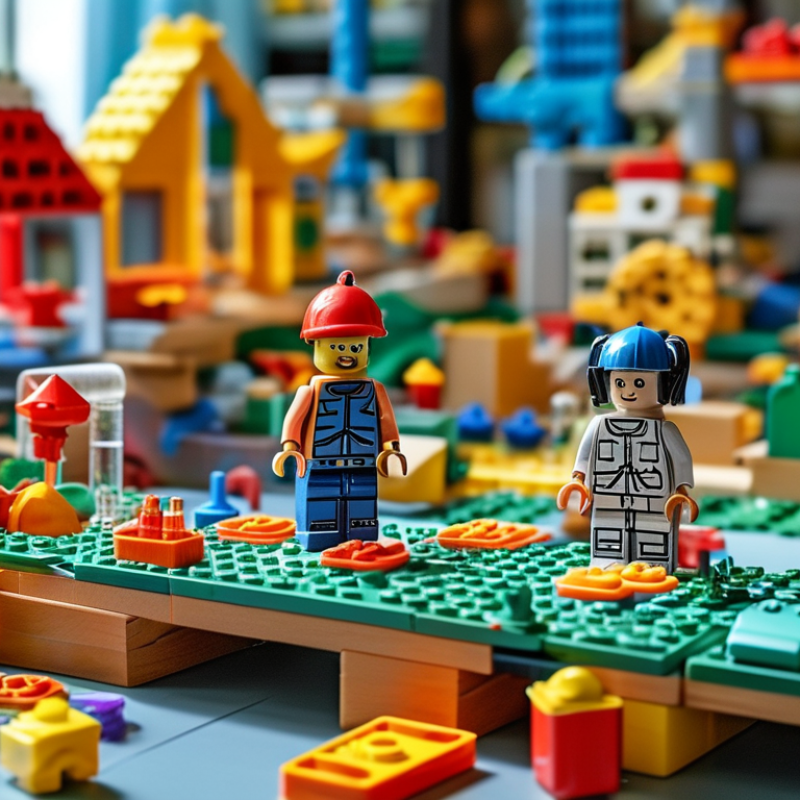
Educational toys are play materials designed to build specific skills while keeping children actively involved. They may include puzzles, counting sets, building pieces, science kits, or story cards. Unlike passive entertainment, these toys ask children to choose, touch, test, and adjust. A child might rotate a wooden shape, hear it fail, then try again. That small failure creates a useful pause. It also makes the activity feel personal.
Children’s attention often follows three features: challenge, movement, and visible progress. A puzzle with missing pieces invites a search. Measuring cups make quantity something children can see. Open-ended blocks support new goals when interest changes. From my experience observing home play, children stay longer when adults ask questions instead of giving answers. “What could fit here?” works better than correcting every attempt. Still, not every educational toy holds attention. Some are too difficult, too noisy, or too structured. I have sometimes mistaken a toy’s learning label for genuine engagement.
A balanced toy shelf can make screen-free play easier, especially when materials remain reachable and partly prepared. Place a sorting tray beside colorful objects, or leave a half-built structure waiting on a table. This visible invitation reduces the effort needed to begin. Early-learning specialists often emphasize age-appropriate challenge, active participation, and adult interaction. Parents can watch for focused expressions, repeated attempts, and spontaneous questions. These signs reveal engagement more reliably than package claims. During cleanup, a child may still explain why one shape belongs in another space.
| Educational Toy Category | Typical Age Range | Primary Learning Dimension | Attention-Capturing Feature | How It Can Replace Screen Use | Adult Involvement |
|---|---|---|---|---|---|
| Building and Construction Toys | 3–8 years | Spatial reasoning, planning, fine-motor control, and problem solving | Open-ended goals, visible progress, and the ability to rebuild after failure | Offers a hands-on activity that can continue without a fixed episode or game level | Low to moderate; adults can ask questions without directing the design |
| Puzzles and Matching Games | 2–7 years | Visual discrimination, memory, concentration, and logical reasoning | A clear challenge, immediate physical feedback, and a satisfying completion point | Encourages sustained attention through achievable, screen-free goals | Moderate; brief prompts can support persistence and self-correction |
| Pretend-Play and Role-Play Sets | 3–8 years | Language, social understanding, emotional expression, and creativity | Story creation, choice, imitation of real-life routines, and social interaction | Creates an adaptable activity that can occupy children alone or with play partners | Moderate to high; shared pretend play can increase conversation and engagement |
| Art, Craft, and Drawing Materials | 3–10 years | Fine-motor skills, self-expression, visual planning, and persistence | Sensory variety, personal choice, and a visible product created by the child | Provides a flexible alternative for creative time, especially when materials are prepared in advance | Low to moderate; adults can demonstrate techniques while preserving the child’s choices |
| Counting, Sorting, and Pattern Materials | 3–7 years | Early mathematics, classification, sequencing, and working memory | Repeatable challenges, observable patterns, and increasing levels of difficulty | Supports short, repeatable learning sessions without digital notifications or autoplay | Moderate; adults can connect the activity with everyday counting and sorting |
| Science and Discovery Kits | 5–12 years | Observation, prediction, cause-and-effect reasoning, and questioning | Surprise, experimentation, real-world relevance, and the opportunity to test ideas | Replaces passive viewing with active investigation and discussion | High; supervision may be needed for setup, safety, and interpretation |
| Board and Card Games | 4–12 years | Rule-following, strategic thinking, communication, and emotional regulation | Turn-taking, uncertainty, social feedback, and clearly defined objectives | Adds structured social interaction and encourages children to stay engaged until the activity ends | High at first; adults model fair play and help children manage winning and losing |
| Child Age | Evidence-Based Screen-Time Benchmark | Useful Educational-Toy Strategy | Why the Strategy Works |
|---|---|---|---|
| Under 2 years | The World Health Organization recommends no sedentary screen time for infants and one-year-olds | Use safe, simple objects and interactive play with an adult | Direct exploration and responsive interaction support early movement, language, and attention |
| 2–4 years | The World Health Organization recommends no more than 1 hour of sedentary screen time per day; less is better | Prepare a small rotation of puzzles, blocks, pretend-play materials, and art activities | Novelty, choice, and hands-on feedback help maintain interest without relying on rapid digital stimulation |
| 5–12 years | Families should set consistent limits that protect sleep, physical activity, schoolwork, and family interaction | Offer projects, strategy games, construction challenges, and science investigations with clear start and finish points | Longer-term goals and increasing difficulty encourage active participation and persistence |
Evidence note: Screen-time benchmarks are based on the World Health Organization’s Guidelines on Physical Activity, Sedentary Behaviour and Sleep for Children Under 5 Years of Age. Toy-related learning descriptions reflect established principles of open-ended play, guided play, pretend play, construction, and hands-on problem solving.
: Educational toys build skills through active play. Children touch, choose, test, and adjust. Examples include puzzles, counting sets, blocks, science kits, and story cards.
Children often focus when play includes challenge, movement, and visible progress. A missing puzzle piece invites searching. A failed shape placement encourages another attempt.
Watch the child, not the package claims. Focused expressions, repeated attempts, and spontaneous questions show real engagement. A learning label proves very little.
Keep materials visible and reachable. Place a sorting tray beside the kitchen table, or leave a half-built tower waiting. Starting should feel easy.
They can, when added naturally to daily routines. A puzzle after breakfast or a building set after school creates a predictable screen-free pause.
Short sessions often work well. Five minutes may be enough. End with a clear action, such as returning pieces to a labeled basket.
Ask open questions instead of correcting every move. Try, “What could fit here?” Then pause. Children need room to think and struggle safely.
The toy may be too difficult, noisy, structured, or badly timed. Tiredness can look like dislike. I have judged toys too quickly before.
Choose sturdy, age-appropriate materials with clear instructions and flexible uses. Check pieces for damage regularly. Avoid turning every activity into homework.
No. A crooked tower can still support planning, balance, and persistence. Sometimes play is valuable without a perfect learning outcome.
Educational toys are designed to make learning enjoyable through hands-on play, problem-solving, creativity, and discovery. Because they actively involve children, these toys can capture attention in ways that passive screen use often does not. How can educational toys reduce screen time? They provide engaging alternatives that satisfy children’s curiosity while helping them develop skills such as language, coordination, memory, and logical thinking. Choosing toys according to a child’s age, interests, ability level, and learning needs can make the experience more meaningful and rewarding.
Parents can introduce educational toys during familiar parts of the day, such as after school, before dinner, or during quiet time. Rotating activities and playing together at first can help children build interest and confidence. Progress can be measured by observing shorter periods of recreational screen use, longer engagement with hands-on activities, and improved independence during play. Setting realistic goals and celebrating small improvements can make reducing screen time a positive and sustainable family habit.

 Osfor Toy
