Educational toys play a crucial role in child development. Many parents wonder, "how do educational toys help cognitive development?" These toys are designed to stimulate a child's brain. They encourage problem-solving skills and critical thinking. Through play, children explore concepts like shapes, colors, and numbers.
Research shows that children engaged with educational toys tend to develop better reasoning abilities. These toys challenge their minds in enjoyable ways. For instance, puzzles enhance spatial awareness, while building blocks foster creativity. Children learn at their own pace. Consequently, they build confidence as they master new skills.
However, not all educational toys are equal. Some may overload a child with information, leading to frustration. Selecting age-appropriate toys is essential. Parents must seek toys that balance fun and learning. This approach ensures that children benefit fully from their playtime. In essence, understanding how to choose the right educational toys can significantly impact cognitive growth.
The Definition and Importance of Cognitive Development in Children
Cognitive development refers to how children think, learn, and understand the world. It involves skills like memory, problem-solving, and decision-making. This development is crucial during early childhood. Key stages in this process shape much of a child's future learning experiences.
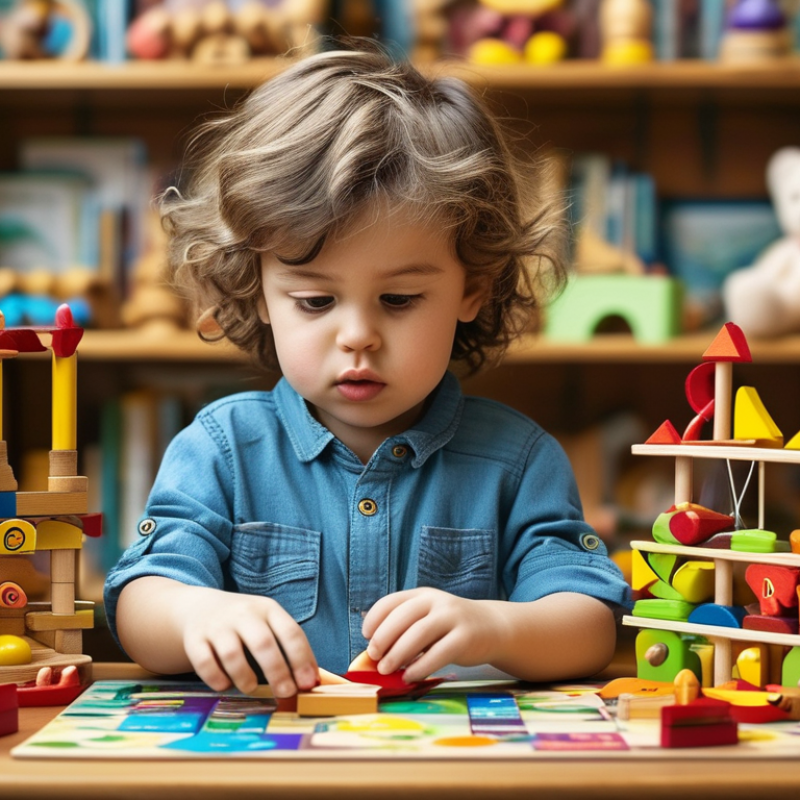
Educational toys play a significant role in fostering cognitive growth. They challenge children and stimulate curiosity. For instance, building blocks introduce concepts like gravity and balance. Puzzles enhance critical thinking as children identify patterns. These activities promote active engagement rather than passive observation.
However, not every toy is beneficial. Some toys may lack educational value or stimulate frustration rather than joy. It's essential for caregivers to select toys that truly aid learning. Balancing fun with educational value is fundamental. Children thrive in environments where they can explore and ask questions. This exploration encourages deeper cognitive connections.
Types of Educational Toys and Their Cognitive Benefits
Educational toys come in various forms. Each type serves a unique purpose in enhancing cognitive development. Puzzles, for example, foster problem-solving skills. Children learn to recognize patterns and shapes while trying to fit pieces together. Building blocks encourage spatial awareness and creative thinking. These toys stimulate imagination as children create structures.
Tips for selecting educational toys include focusing on open-ended options. Toys that allow for multiple uses promote critical thinking. Consider the child's interests as well. This ensures engagement and encourages deeper exploration of concepts. Another tip is to involve caregivers in playtime. This interaction enhances learning, making it a social experience.
Some toys may seem simplistic but have profound effects. For example, art supplies enhance fine motor skills. Kids explore colors and textures, which boosts sensory development. While it's easy to overlook the importance of free play, it remains crucial. Unstructured playtime allows children to experiment and discover on their own.
How Do Educational Toys Enhance Cognitive Development?
How Educational Toys Facilitate Problem-Solving Skills
Educational toys play a crucial role in developing problem-solving skills in children. These toys encourage kids to think creatively and approach challenges from different angles. For instance, puzzles can help enhance spatial reasoning, as kids figure out how pieces fit together. Similarly, building sets stimulate logical thinking, as children learn to plan and execute their designs step by step.
Through engaging with these toys, children often encounter obstacles. They may struggle to complete a puzzle or cannot balance their structures. Such moments are critical for learning. Kids experience frustration, but they also learn to persist. Each challenge they face strengthens their ability to search for solutions without giving up. This self-driven problem-solving fosters resilience and adaptability.
Additionally, collaborative play with educational toys can enhance problem-solving skills further. When children work together, they must communicate and share ideas. This exchange nurtures teamwork and social skills. They may disagree on approaches but learn to negotiate and compromise. These experiences prepare them for future challenges, both in play and life.
The Role of Play in Enhancing Learning and Cognitive Abilities
Play is a crucial element in a child’s cognitive development. During play, children interact with various materials and experiences. This interaction fosters creativity and problem-solving. Educational toys stimulate curiosity. They encourage children to explore and experiment. For instance, puzzle games improve spatial awareness. Building blocks enhance fine motor skills. These simple activities lay the groundwork for more complex thinking.
Parents can enhance this play experience. Provide a variety of educational toys that target different skills. Rotate toys to maintain interest. Observe what captivates your child's attention. Use everyday moments to ask open-ended questions. For example, "What do you think will happen if we stack these blocks higher?" This encourages critical thinking and communication.
Engage in playtime together. Share in the discovery process. Sometimes, let your child lead the way. This can be a learning experience for both of you. Reflect on your interactions. What worked? What didn't? Learning through play creates a strong foundation for lifelong skills. Embrace this journey with flexibility and openness.
Research Findings on the Impact of Educational Toys on Cognitive Growth
Educational toys play a significant role in enhancing cognitive development in children. Research shows that these toys promote problem-solving skills, creativity, and critical thinking. For example, puzzles can improve spatial reasoning. Their colorful designs attract children's attention while engaging their minds.
In studies, children who regularly interacted with educational toys demonstrated better memory retention. They were quicker at grasping concepts. However, not all toys are equally effective. It's essential to choose toys that stimulate curiosity and encourage exploration. Toys that limit imagination may hinder growth.
The social aspect of educational toys also matters. Playing together helps children develop communication skills. Yet, some children might struggle with teamwork. Observing their interactions can reveal areas for improvement. While the benefits are clear, it’s vital to remember that balance is key. Too many toys can be overwhelming. Children also need unstructured playtime to foster independent thinking.
How Do Educational Toys Enhance Cognitive Development? - Research Findings on the Impact of Educational Toys on Cognitive Growth
| Toy Type |
Cognitive Skill Enhanced |
Age Group |
Research Findings |
| Building Blocks |
Spatial Awareness |
2-5 years |
Children who play with building blocks show improved spatial reasoning skills. |
| Puzzle Games |
Problem Solving |
3-6 years |
Engaging with puzzles enhances critical thinking and problem-solving abilities. |
| Role Play Sets |
Social Skills |
4-8 years |
Role-playing encourages cooperation and communication among peers. |
| Science Kits |
Analytical Skills |
6-10 years |
Children experimenting with science kits develop analytical thinking and inquiry skills. |
Conclusion
Educational toys play a crucial role in enhancing cognitive development in children by providing stimulating environments that foster learning through play. These toys, which come in various forms, promote essential cognitive skills such as problem-solving, critical thinking, and creativity. By engaging with educational toys, children learn to navigate challenges and develop strategies, enhancing their overall cognitive abilities.
Research shows that play is a fundamental aspect of learning, as it encourages exploration and curiosity. Educational toys facilitate this process by introducing concepts in a fun and interactive way, making complex ideas more accessible. Thus, understanding how do educational toys help cognitive development is vital for parents and educators aiming to support children's growth in meaningful and impactful ways.

 Osfor Toy
