China Top 10 Educational Toys to Enhance Memory Skills?

Time:2026-10-25 Author:Liam
0%

Memory develops through repeated attention, active recall, and meaningful play. This article explores China’s top 10 educational toys for strengthening these skills in children. It asks a practical question: how can educational toys enhance memory skills in everyday learning?

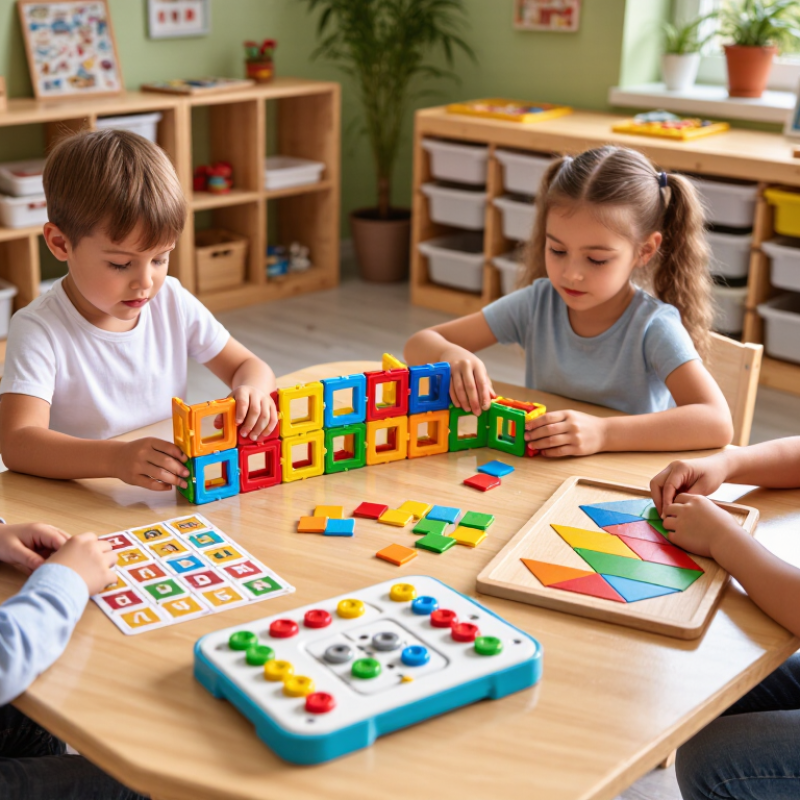
The selected toys include memory card games, magnetic building sets, Chinese tangram puzzles, sequencing boards, pattern blocks, and interactive learning kits. Each toy encourages children to notice details, remember rules, recognize patterns, or rebuild an earlier arrangement. A child may study six picture cards, turn them face down, and recall matching positions. Another may recreate a bridge from colored blocks after viewing it for one minute.

The discussion uses child-development principles, classroom observations, and product-use considerations. Age suitability, material safety, durability, screen exposure, and parental guidance all matter. A toy with bright lights is not automatically educational. Quiet repetition may produce stronger memory practice.

No single product improves every child’s memory. Some children may enjoy puzzles but avoid timed games. Others may remember stories better than shapes. Results can also depend on sleep, attention, language development, and play frequency. This article therefore treats “top” as a practical guide, not an absolute scientific ranking. Parents and educators should observe real behavior, adjust difficulty, and allow children to explain their thinking. Small mistakes can be useful. They reveal which memory strategies still need support.
China Top 10 Educational Toys to Enhance Memory Skills?

What Makes Educational Toys Effective for Memory Development

China’s top ten educational toy categories often include memory cards, matching games, puzzles, building blocks, sequencing boards, maze toys, sound puzzles, number games, story cubes, and recall-based board games. Their value depends less on bright packaging and more on how they challenge memory. A child may study six picture cards, turn them face down, and recall their positions. This simple action trains visual memory, attention, and delayed recall.

Effective toys usually provide clear rules, repeated practice, and gradual difficulty. Matching games strengthen recognition, while sequencing boards support working memory and logical order. Building activities can also help children remember shapes, steps, and spatial relationships. In my experience, short sessions work better than forced practice. Ten focused minutes beside a quiet table can be more useful than an hour of distracted play. Children need feedback, but not constant correction. Let them explain how they remembered.

Research-informed design matters. Good toys use age-appropriate tasks, safe materials, readable instructions, and achievable challenges. However, not every educational label proves real learning value. Some toys look impressive but offer little recall practice. I have also seen children lose interest when difficulty rises too quickly. That weakness deserves attention. Parents and teachers should observe progress, adjust the rules, and connect play with daily details, such as remembering a shopping list or arranging bedtime steps. Memory develops through meaningful repetition, not pressure.

Key Features of China’s Top Memory-Building Educational Toys

China Top 10 Educational Toys to Enhance Memory Skills?

China’s strongest memory-building educational toys combine repetition, movement, and visible feedback. Matching card sets train recognition and delayed recall. Sequencing boards help children remember order, cause, and effect. Pattern blocks develop visual memory through colors, shapes, and rotation. Simple puzzles also strengthen attention, especially when children rebuild the same image several times.

Useful designs often include smooth edges, durable materials, clear age guidance, and pieces large enough to handle safely. Some toys use sound, counting, or storytelling to engage more than one memory pathway. A recall tray can hold small objects for one minute, then hide them. Children must identify what changed. It feels like play, but it requires careful observation. Not every toy works equally well. Some children lose interest quickly, while others need fewer pieces and slower instructions. That difference matters.

Tips: Choose one memory goal at a time. Start with three or four pieces. Increase difficulty gradually. Ask children to explain their choices, not just give answers. Short sessions often work better than forced practice. Check the toy regularly for loose parts, fading labels, or damaged surfaces. Parents and teachers should also watch whether the activity builds memory or merely rewards quick guessing.

Ten Chinese Educational Toys for Strengthening Memory Skills

Ten Chinese Educational Toys for Strengthening Memory Skills

Chinese educational toys can make memory practice more active and less repetitive. Useful choices include tangram sets, abacus boards, Chinese knot puzzles, wooden block puzzles, sliding puzzles, pattern tiles, matching cards, maze boards, story cubes, and traditional tile-matching sets. Each toy trains a different memory action, such as recalling shapes, numbers, sequences, or spatial positions. In my experience, children remember more when they explain their choices aloud. A quiet room and short sessions also help. Cognitive learning research often supports retrieval practice, repetition, and gradually increasing difficulty.

Try changing one detail after every successful round. Remove a card, rotate a shape, or alter the puzzle order. Keep the challenge small. Too much difficulty can create guessing instead of learning. I have seen children enjoy an abacus, yet lose interest when tasks become purely mechanical. That is a useful reminder: educational value depends on play quality, not appearance alone. Progress may look uneven. Some days show little improvement.

Tips: Start with five items and ask the child to recall them after one minute. Use familiar colors and simple instructions. Encourage the child to describe a strategy. Record results briefly, but do not turn play into a test. An occasional mistake is helpful; it shows which memory step needs more practice. Rotate the ten toys weekly to maintain curiosity and avoid tired routines.

China Top 10 Educational Toys to Enhance Memory Skills? - Ten Chinese Educational Toys for Strengthening Memory Skills
No. Educational Toy or Game Typical Age Common Format Primary Memory Skill How It Supports Memory Practice Suggested Session
1 Chinese Tangram Ages 5+ Seven geometric pieces forming silhouettes Visual-spatial and working memory Players study a target image, remember the arrangement, and recreate it using all seven pieces without overlapping. 10–20 minutes
2 Traditional Chinese Abacus Ages 5+ Beads arranged on counting rods Sequential and working memory Children remember number patterns, follow calculation steps, and gradually visualize bead movements after physical practice. 10–15 minutes
3 Go Board Game Ages 6+ Grid board with black and white stones Pattern recognition and strategic memory Players recall previous positions, recognize familiar formations, and remember short sequences of moves before making a decision. 15–30 minutes
4 Chinese Chess Ages 6+ Board game with 32 pieces Rule, position, and planning memory Players learn the movement rules, remember piece locations, and mentally review possible responses several moves ahead. 20–40 minutes
5 Picture Matching Cards Ages 3+ Pairs of face-down illustrated cards Visual recognition and location memory Players turn over two cards at a time and remember the image and location of unmatched cards to find pairs. 10–15 minutes
6 Chinese Character Memory Cards Ages 4+ Character-and-picture or character-and-meaning pairs Verbal, visual, and associative memory Children match a Chinese character with its picture, pronunciation, or meaning and recall the association during repeated rounds. 10–15 minutes
7 Chinese Knot Lacing Set Ages 6+ Cord, beads, and step-by-step knot patterns Procedural and sequential memory Players observe a knot sequence, remember the order of loops, and reproduce the pattern through repeated hand movements. 15–25 minutes
8 Wooden Interlocking Puzzle Ages 6+ Interlocking wooden pieces or burr-style puzzles Tactile, spatial, and problem-solving memory Players remember which piece positions worked or failed and use that information to repeat successful steps during assembly. 15–30 minutes
9 Pattern Building Blocks Ages 4+ Colored blocks with model pattern cards Visual sequencing and working memory Children study a model briefly, cover it, and reconstruct the same color, shape, and orientation sequence from memory. 10–20 minutes
10 Sliding Number Puzzle Ages 6+ Numbered tiles moved within a single empty space Sequential planning and working memory Players remember earlier tile positions, plan a sequence of moves, and monitor how each move changes the board. 10–20 minutes

How to Choose Age-Appropriate Memory Learning Toys

China’s Top 10 Educational Toys to Enhance Memory Skills

How to Choose Age-Appropriate Memory Learning Toys

Choosing a memory toy should begin with the child, not the product list. For toddlers, use large picture cards, simple matching boards, and short sound games. Avoid tiny pieces and complicated rules. At three to five years, children can try sequence cards, hidden-object games, and puzzles with six to twelve pieces. These activities strengthen recall while supporting language and attention.

Older children may enjoy strategy games, visual memory challenges, and storytelling cards. Select tasks that require remembering order, location, or instructions. A useful toy should feel slightly challenging, but not discouraging. Experts in early learning often recommend short sessions of ten to fifteen minutes. Watch the child’s behavior. Repeated guessing, frustration, or wandering attention may show that the task is too difficult.

I once chose a highly detailed memory game for a young child. It looked educational, yet the rules were too demanding. The child stopped playing after five minutes. That experience changed my approach. Check material quality, rounded edges, clear instructions, and age guidance before purchase. Also, consider cultural familiarity, because familiar images can make recall easier. No toy improves memory alone. Conversation, sleep, movement, and patient repetition matter too. A simple game used regularly may work better than an impressive toy left untouched.

Safe and Effective Ways to Use Educational Toys at Home

China’s educational toy market offers many tools for building memory skills at home.

Useful choices include matching cards, sequencing puzzles, pattern blocks, memory boards, sorting games, and story cubes. Choose toys with clear instructions and age-appropriate difficulty. A child should understand the task without feeling defeated. Check the materials, edges, small parts, and cleaning instructions before play. Avoid toys with loose pieces for children under three.


Safety comes before learning.

Play on a clean, uncluttered floor or table. Stay nearby when a toy contains small components. Keep pieces in a sealed container after each session. Natural light can reduce eye strain, while short sessions help children remain focused. Ten to fifteen minutes is often enough. Let the child explain the rules aloud. This supports recall and shows whether the activity is genuinely understood.


Keep the routine flexible.

Ask the child to remember three objects, then increase the number slowly. Praise careful thinking, not only correct answers. If frustration appears, reduce the difficulty immediately. Some days, the activity fails. That is useful information. A tired child may need movement, water, or rest instead of another puzzle. Adults should observe progress weekly and remove toys that create repeated confusion. Memory improves through repeated, pleasant practice, not pressure.

FAQS

How do memory toys help children remember information?

They ask children to recall pictures, numbers, shapes, or positions after seeing them briefly. This trains visual memory and delayed recall. Small challenges matter.

Which toy types support memory development?

Matching cards, puzzles, sequencing boards, tangrams, maze boards, story cubes, and tile-matching games can help. Each targets a different memory action.

How long should a memory practice session last?

Begin with about ten focused minutes. A quiet table often works better than a long, distracted session. Stop before attention fades.

How can adults make a toy gradually harder?

Add one small change after success. Remove a card, rotate a shape, or change the puzzle order. Avoid sudden difficulty increases.

Should adults correct every mistake?

No. Let children explain their strategies before offering help. An occasional mistake can reveal which memory step needs practice.

How can parents connect toy play with daily routines?

Ask children to remember a short shopping list or arrange bedtime steps. Real-life details give memory practice a useful purpose.

What materials and instructions should a good toy provide?

Choose safe materials, clear rules, readable instructions, and age-appropriate tasks. The toy should feel challenging, not confusing.

How can adults keep children interested in memory activities?

Rotate different toys weekly and vary familiar tasks. Keep records brief. Progress may look uneven, and some days show little improvement. That is normal.

Does attractive packaging prove a toy has learning value?

No. Bright colors may attract attention, but effective play requires recall, repetition, and meaningful choices. I may sometimes overvalue appearance. Observation matters more.

Conclusion

Educational toys can make memory practice enjoyable by combining repetition, problem-solving, visual recognition, and active participation. When children match cards, arrange patterns, recall sequences, or follow changing rules, they exercise attention, working memory, and information-retrieval skills in a natural way. This explains how can educational toys enhance memory skills: they turn abstract learning into hands-on activities that encourage children to observe carefully, remember details, and apply what they have learned.

China’s educational toy market offers many useful options, including memory cards, logic puzzles, sequencing games, building sets, maze challenges, and interactive learning kits. The most effective choices usually provide clear goals, adjustable difficulty, durable materials, and age-appropriate challenges. Parents should select toys according to a child’s developmental level, interests, and attention span, then introduce rules gradually and allow independent exploration. At home, adults can create a calm play area, limit distractions, supervise small parts, and praise effort rather than speed. Short, regular sessions can support memory development while keeping play safe, positive, and engaging.

Liam

Liam

Liam is a dedicated marketing professional with a profound expertise in the industry, where he excels at highlighting the unique advantages of our core products. With a keen understanding of market trends and consumer needs, Liam frequently updates our company’s professional blog, providing......