In 2026, educational toys are more than colorful objects with letters or numbers printed on them. A good toy invites a child to try, notice, and try again. Building blocks can become a tower, a bridge, or—after one wobble—a pile on the rug. Simple puzzles, pretend-play sets, and age-appropriate science kits can also encourage conversation, creativity, and problem-solving through everyday play.
A useful question is: why are educational toys important for early childhood? Young children learn by exploring objects, testing ideas, and sharing attention with adults. The right toy can offer a gentle starting point for those experiences. It does not need batteries or a long list of features. Often, a few sturdy pieces are enough. What matters is whether the toy suits the child’s age, interests, and current abilities. Caregivers should check age guidance and small-parts warnings, then observe how the child actually plays. That detail matters.
This guide looks at qualities that make educational toys useful, engaging, and worth considering in 2026. It also separates meaningful play value from flashy claims. No toy can guarantee a particular skill or make every child love learning. Children differ, and their interests change. Some toys may be ignored at first, and that is not always a failure. A quiet set of wooden shapes might hold attention longer than a talking gadget. The best choice is usually one that feels safe, invites hands-on exploration, and leaves room for the child’s own ideas. Real play is messy. That is part of the point.
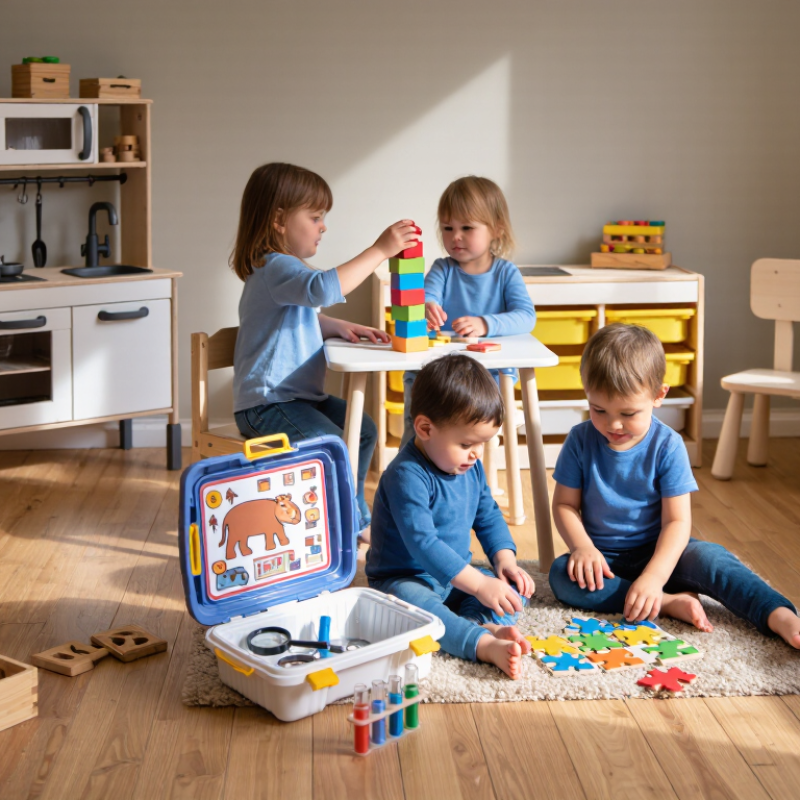
In 2026, an educational toy is defined less by its label than by what a child can do with it. It invites active choices, not just watching lights or hearing sounds. A set of blocks, for example, can prompt sorting, balancing, storytelling, and early counting. The learning comes from the interaction, not a promise printed on the box. That distinction matters.
Useful toys offer a manageable challenge and room to try again. A shape puzzle gives clear feedback when a piece fits; pretend-play objects let children invent their own rules. Look for sturdy construction, comfortable handling, and age guidance that suits the child. For younger children, check carefully for loose or detachable pieces. More features do not automatically mean more learning.
A toy should also leave space for conversation and discovery. An adult might ask, “What could make this tower steadier?” and let the child test ideas. Still, not every play session produces an obvious skill or neat result. Sometimes a child is tired, or the toy simply loses its appeal after a week. That is worth noticing. Observe whether the child returns to it, changes the challenge, or asks for help; those small details can reveal more than a flashy label.
What defines an educational toy in 2026? Look for play that encourages active learning, developmentally appropriate challenge, and meaningful interaction.
How to read this chart: These are editorial rubric points, not survey results or product ratings. The framework highlights features consistent with developmentally appropriate, play-based learning: hands-on exploration, problem-solving, creativity, social interaction, and adaptability. Use it as a guide when choosing toys for a child’s age, interests, and abilities.
Educational toys support children’s development by giving them safe, hands-on ways to explore ideas. A shape sorter invites a child to turn, compare, and try again. Building blocks strengthen hand control while introducing balance, size, and simple problem-solving. The learning is not always tidy. A tower may fall five times before it stands.
Play also creates natural chances to practice language and social skills. A child describing a toy animal can learn new words, while pretend play encourages storytelling and perspective-taking. With puzzles or simple board games, children may practice waiting, sharing, and coping with small disappointments. Small steps count. These activities do not guarantee a particular outcome, and children develop at different rates.
The adult’s role matters, too. Asking, “What could make it steadier?” can invite a child to explain a plan without taking over. Some children prefer repeated play, while others move quickly between activities; both patterns can be normal. I sometimes place too much value on a finished craft or correct answer. The process may reveal more: careful sorting, a new question, or the decision to start again. Choose toys that suit a child’s age and interests, and leave room for open-ended play.
| Toy Category | Typical Age Range | Developmental Skills Supported | How Children Learn Through Play | Helpful Adult Support | Safety and Selection Notes |
|---|---|---|---|---|---|
| Stacking cups and simple shape sorters | Infants and toddlers; choose items suited to the child’s abilities | Hand-eye coordination, grasping, spatial awareness, and early problem-solving | Children handle, stack, nest, and match objects, noticing differences in size, shape, and position. | Name actions and describe concepts such as “inside,” “on top,” and “bigger.” Allow time for independent exploration. | For children under 3, avoid small parts that could pose a choking hazard. Check age guidance and inspect for damage. |
| Building blocks and construction sets | Preschool age and up; select block size and complexity for the child | Spatial reasoning, creativity, fine motor skills, planning, and persistence | Children test how pieces fit together, build structures, and adjust their designs when they fall or do not work as planned. | Ask open-ended questions such as “What could make it taller?” rather than demonstrating a single correct design. | Choose sturdy, age-appropriate pieces with no sharp edges. Keep small construction pieces away from young children. |
| Picture books, story cards, and puppets | Infants through school age, with content matched to the child’s development | Language, listening, imagination, memory, and social-emotional understanding | Shared reading and pretend storytelling introduce vocabulary, encourage conversation, and let children explore characters’ feelings and choices. | Follow the child’s interests, invite predictions, and talk about pictures. Reading together can be valuable even before children can speak. | For babies and toddlers, use durable books and supervise play with books that have detachable pieces. |
| Jigsaw puzzles and matching games | Preschool age and up; start with fewer, larger pieces | Visual discrimination, attention, memory, fine motor control, and problem-solving | Children compare shapes and images, try possible matches, and learn to persist through manageable challenges. | Offer hints without taking over. Adjust the number and size of pieces to keep the activity engaging rather than frustrating. | Check that pieces are intact and large enough for the child’s age. Store loose pieces safely after play. |
| Art materials such as crayons, washable paint, and modeling dough | Toddler age and up, with close supervision for younger children | Creative expression, fine motor development, sensory exploration, and early decision-making | Drawing, shaping, and mixing let children experiment with color, texture, and form while expressing their own ideas. | Focus on the child’s process and choices. Describe what you notice instead of judging every creation by its appearance. | Use materials labeled for the intended age and follow product instructions. Supervise use and prevent materials from being eaten. |
| Pretend-play sets and everyday role-play props | Preschool age and up | Imagination, communication, cooperation, emotional expression, and flexible thinking | Children act out familiar or invented situations, practice using language, and explore different roles and perspectives. | Join when invited, share play ideas, and support turn-taking without directing the whole story. | Choose props without dangerous parts, cords, or realistic weapons. Make sure costumes and accessories fit safely. |
| Simple board games and turn-taking games | Preschool age and up; choose rules appropriate to the child | Taking turns, following directions, counting, emotional regulation, and cooperative play | Children practice shared rules, waiting, making choices, and responding to both success and setbacks. | Model calm play and explain rules briefly. For younger children, simplify the game and emphasize participation over winning. | Check game pieces for choking hazards and follow the age guidance on the packaging. |
| Outdoor movement toys such as balls and balance equipment | Choose equipment to match the child’s size, coordination, and experience | Gross motor skills, balance, coordination, spatial awareness, and active play habits | Running, throwing, catching, and balancing give children opportunities to practice controlled movement and judge distance. | Provide a clear, age-appropriate play area and encourage practice at the child’s own pace. | Use equipment as directed and provide appropriate supervision and protective gear where needed. Check the play area for hazards. |
Educational toys are most valuable when children can touch, test, and change things themselves. Building blocks invite spatial reasoning and early engineering: a child may balance a wide base, add a tall tower, then watch it wobble. That small failure is part of the lesson. Puzzles support visual matching and persistence, while shape sorters help younger children notice differences in size and form. These toys do not teach every child in the same way, so observe what holds their attention.
Pretend-play sets, such as toy kitchens or doctor kits, encourage language, empathy, and flexible thinking. Children practice naming objects, taking turns, and inventing situations.
Art materials build fine motor control and creative decision-making; even choosing between a thick crayon and a thin one involves planning. Simple science toys, like magnifiers or water wheels, can prompt careful observation and questions about cause and effect. A toy alone cannot guarantee a skill. Adult attention and room to explore matter, too.
Tips: Choose toys that match a child’s current interests, not only their age label. Offer a few pieces at a time, and let the child lead. Resist fixing every crooked tower. Sometimes I step in too soon; waiting a little longer can reveal what a child is trying to solve. Rotate toys when they feel familiar, and check that pieces are sturdy, clean, and suitable for the child’s age.
A safe educational toy should match a child’s current abilities, not an adult’s hopes for quick progress. For a toddler, choose chunky blocks that are easy to grasp and too large to swallow; for an older child, try a puzzle with pieces that invite problem-solving without causing frustration. Check the age guidance, small-parts warnings, seams, cords, and battery compartments before buying. Small details matter. The American Academy of Pediatrics’ 2019 clinical report, Selecting Appropriate Toys for Young Children in the Digital Era, favors hands-on toys that encourage interaction, imagination, and open-ended play. A toy does not need lights or a long feature list to support learning.
Safety deserves the same attention as learning value. The U.S. Consumer Product Safety Commission estimated 231,700 toy-related emergency-room injuries in 2023 in its Toy-Related Deaths and Injuries report. That figure covers toys broadly, not educational toys alone, but it is a reminder to inspect items and supervise play. Check that parts stay firmly attached, surfaces are smooth, and instructions make sense for the child’s age. Then watch the toy in use: a building set that seems manageable may still frustrate a tired child, while a simple sorting game may hold attention longer than expected. Not every toy fits. Reassess as skills and interests change; age labels help, but they cannot predict every child.
In 2026, educational toys are moving toward flexible play rather than one fixed solution. Building sets with varied shapes can support counting, spatial reasoning, and storytelling. A child might sort wooden pieces by size, then use them to build a pretend shop. Small changes matter. The same materials can suit different ages and abilities when instructions offer several ways to play.
Some toys now use simple sensors or companion apps to respond to a child’s choices. The useful versions keep the screen secondary: a light or gentle sound can offer feedback without taking over. Adults should check what information a connected toy collects and whether its core activities work offline. More technology does not always mean better learning. That is not automatic.
Another visible trend is inclusive, repairable design. Larger pieces, tactile markings, and clear contrasts can make activities easier to access, while replaceable parts may extend a toy’s useful life. Cooperative games are also gaining attention, giving children chances to explain ideas and take turns. Yet “educational” labels can promise too much. A toy cannot guarantee progress; attentive play, repetition, and a child’s own interests still matter.
It lets children make choices, test ideas, and try again. A label alone proves little.
Blocks, puzzles, and shape sorters offer hands-on challenges. A wobbly tower can teach balance.
Toy kitchens or doctor kits invite children to name objects, take turns, and invent stories. Play can get messy.
Check the age guidance, small-parts warnings, seams, cords, and battery compartments. Look closely.
They help, but they cannot predict every child. Watch how your child handles the toy and whether frustration builds.
Ask a simple question, such as, “What might steady this tower?” Then give the child time to test an idea. I sometimes step in too soon.
Not necessarily. A simple sorting game may hold attention longer than a toy with lights and sounds.
Notice whether your child returns to it, changes the challenge, or asks for help. Interests shift. Rotate toys, and inspect them regularly.
Educational toys in 2026 are designed to make learning active, engaging, and meaningful through play. They can encourage curiosity, creativity, problem-solving, communication, and confidence while helping children build early skills in areas such as language, mathematics, science, and social interaction. Understanding why are educational toys important for early childhood means recognizing that children often learn best when they can explore, experiment, and enjoy the process. Different toys support different abilities, from building and sorting activities to imaginative play and age-appropriate digital experiences.
Choosing the right toy means considering a child’s age, interests, developmental stage, and safety. Look for durable materials, clear age guidance, and designs that allow children to play without unnecessary hazards. Emerging trends for 2026 include adaptable toys, inclusive learning experiences, and thoughtfully designed technology that supports hands-on discovery rather than replacing it. The most valuable educational toys are not necessarily the most complex; they are the ones that invite children to think, create, and learn at their own pace.

Osfor Toy